Introduction
Digitalization in the bus and commercial vehicle sector is accelerating. Operators are reviewing connected platforms, cameras, displays, sensors, driver safety systems and cloud workflows to make fleet operations easier to manage.
Yet many projects face the same execution problem: digitalization is easy to plan, but difficult to deliver when devices, firmware, communication protocols and cloud systems are handled as separate pieces. Integrated Engineering provides a more practical way to coordinate those layers before deployment begins.
Integrated Engineering: The Approach That Changes Everything
Integrated Engineering means designing the vehicle hardware, firmware, communication layer and cloud platform as one ecosystem, even when the final project uses different device models or customized functions.
Instead of treating each device as a separate procurement item, project teams define how data should move from the vehicle to the platform, how alerts should be handled, how updates should be managed, and how technicians can maintain the system after deployment.
What the approach connects
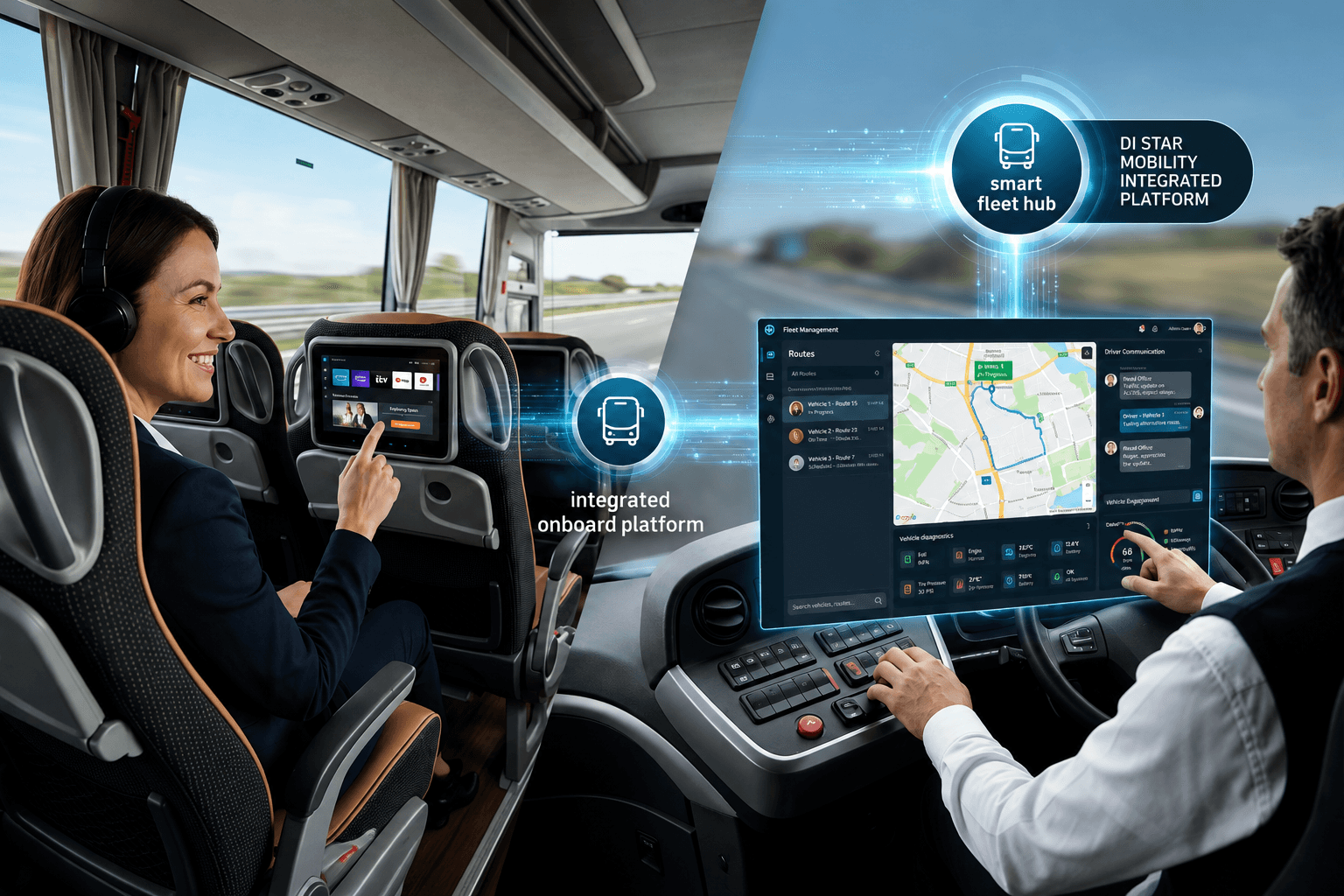
A practical integrated framework usually connects onboard devices, firmware behavior, network communication, cloud-side processing, platform interface and technical documentation. These layers do not need to be complicated, but they need to be aligned.
Predictable Project Timelines
When engineering teams understand the full chain from onboard hardware to cloud-side data handling, they can identify likely issues before deployment begins. This helps the project move from trial and error toward planned execution.
A predictable timeline does not mean every project is identical. Vehicle layout, target market, integration scope and documentation needs still require review. The difference is that known dependencies are visible earlier, which makes pilot testing and rollout planning more practical.
Faster Customization Without Losing Stability
Commercial fleets often require project-specific functions. These may include route-based video policies, API connections, user interface adjustments, integration with existing MDVRs, sensor input expansion or platform workflow changes.
With integrated engineering, customization can be evaluated across the ecosystem instead of being treated as a last-minute patch. Hardware limits, firmware behavior, communication format and platform display can be reviewed together, reducing the risk that one change breaks another part of the system.
- Route-based video or event policies
- API or platform integration requirements
- User interface and language adjustments
- Connection to existing vehicle devices
- Sensor input or signal expansion
Cleaner Data for Operational Decision-Making
Fleet data is useful only when it is consistent, timely and correctly interpreted. A unified engineering approach helps standardize message formats, GPS and sensor channels, timestamps and event records before the data reaches the platform.
This supports clearer operational review. Managers can understand what happened, where it happened, which vehicle or device generated the record, and how the information should be used in daily operation.
Why data consistency matters
Without consistent data, reports may look complete while still being difficult to use. Integrated engineering reduces that risk by connecting data definition, device behavior and platform presentation early in the project.
Lower Long-Term Maintenance Cost
For bus and fleet operators, total cost of ownership matters more than the purchase price of a single device. A system that is difficult to update, diagnose or replace can become expensive over time.
Integrated engineering can reduce long-term maintenance pressure by simplifying replacement logic, improving documentation, supporting remote diagnostics where the selected platform and device configuration allow it, and reducing training complexity for technicians.
Scalability for Future Upgrades
Digitalization is not a one-time event. Bus and commercial vehicle projects may evolve with new regulations, new vehicle models, new IoT standards, new cloud features and future AI applications.
An integrated framework makes future upgrades easier to review because the relationship between devices, firmware, communication and platform data is already defined. This can help operators add functions or scale to more vehicles with less disruption.
Case Insights from Emerging Markets
In emerging markets such as Southeast Asia and South America, fleet modernization is often shaped by practical conditions: mixed vehicle types, local installation resources, demanding operating environments and the need for clear project support.
Operators and integrators in these markets commonly need reliable vehicle hardware, cloud platforms that support actionable review, and a partner who understands the full system rather than a single device category.
- Hardware that fits real commercial vehicle environments
- Platform workflows that turn data into usable review
- Engineering support across device, firmware and cloud layers
Distar Mobility’s Integrated Approach
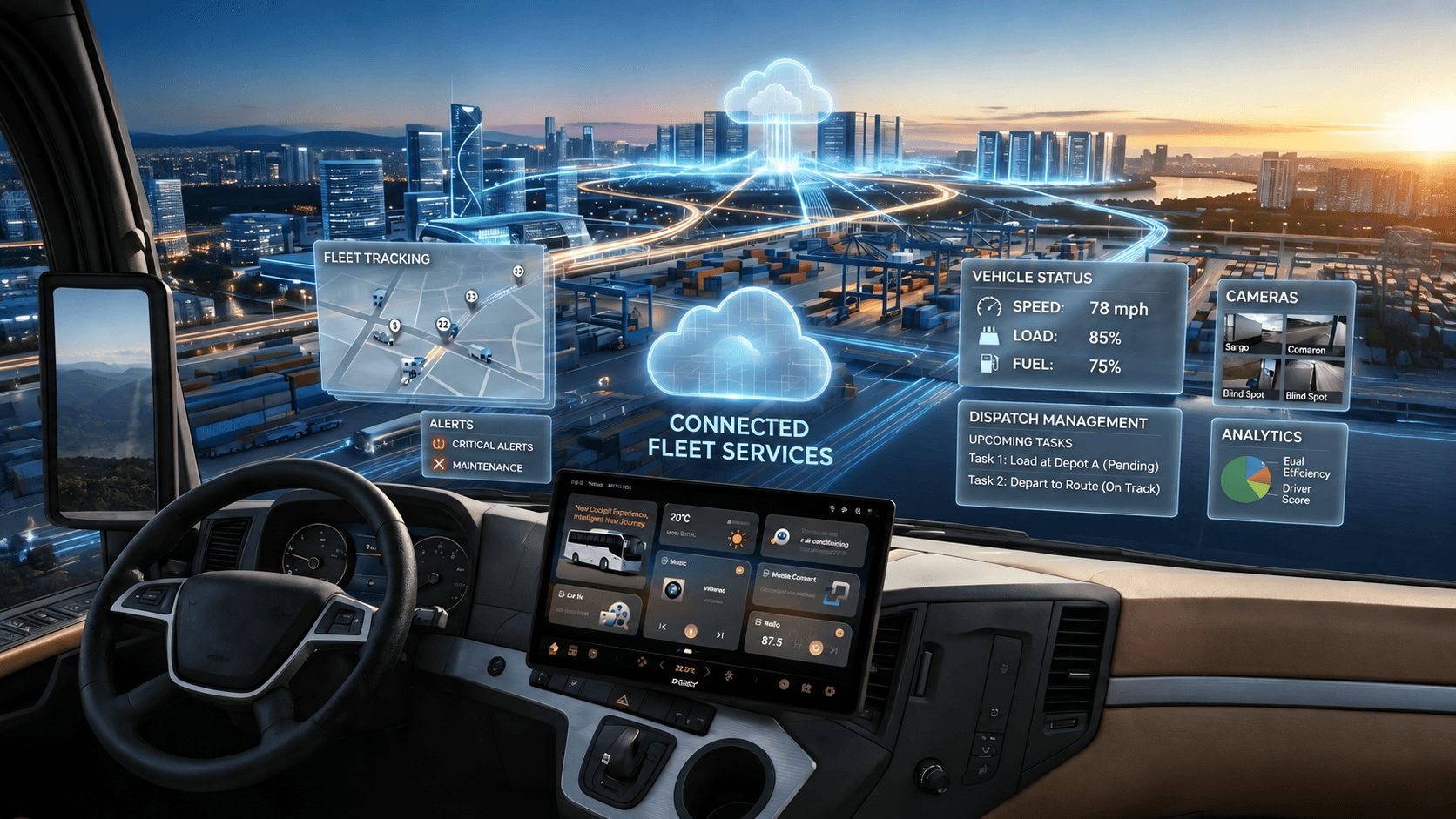
Distar Mobility supports commercial vehicle electronics projects through a full-chain engineering framework. The project direction may involve commercial-grade displays, Android terminals, MDVR and telematics devices, sensor options, protocol-level integration, platform workflows, cross-device interoperability, documentation and engineering support.
By aligning these components, project teams can evaluate deployment risk, customization scope and long-term maintenance needs more clearly before scale-up. This is not only a product selection exercise. It is an engineering method for making bus and fleet digitalization easier to execute.
- Commercial-grade displays and smart terminals
- MDVR, telematics and vehicle monitoring devices
- Protocol-level and cross-device integration support
- Cloud platform workflow planning
- Documentation and engineering coordination for B2B projects
Conclusion: Engineering Defines the Success of Digitalization
Digitalization has become a standard goal for modern fleets. But the real differentiator is not the number of devices or features. It is engineering coherence.
When the system works as a whole, deployments become easier to plan, data becomes clearer, operations become more manageable, and future upgrades are easier to evaluate. For bus and commercial fleet projects, Integrated Engineering is often the difference between adding devices and building a usable digital operation.