Introduction
This article gives a general overview of how thermal imaging cameras are typically manufactured. Specific processes, materials and tests can vary by supplier, product design and project requirements.
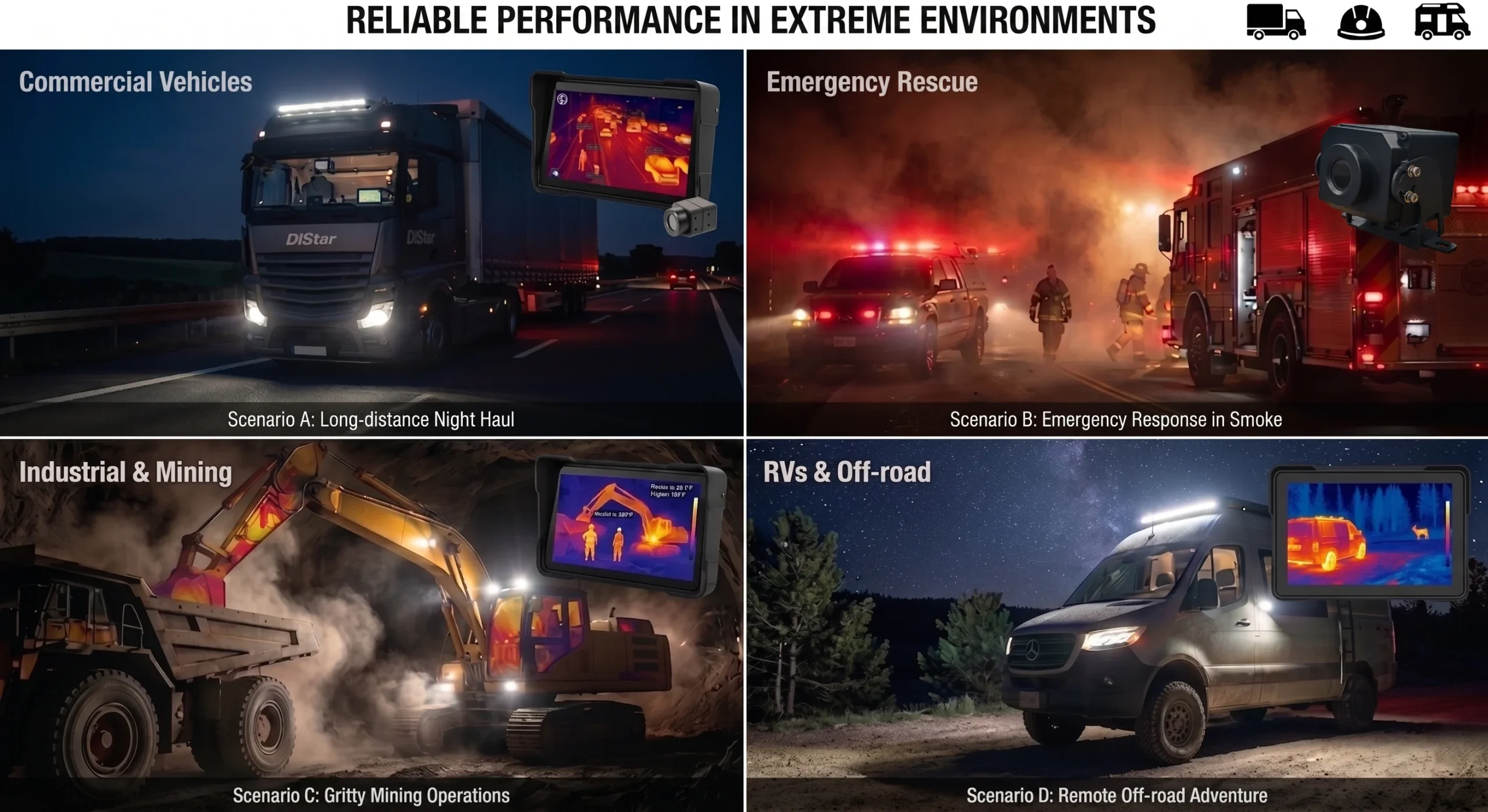
Today, Thermal imaging cameras play a significant role in vehicle monitoring and safety. Logistic vehicles, taxis, commercial tour buses, mining vehicles, etc., widely use them to enhance safety and operational performance. They also serve as evidence in case of incidents.
General Manufacturing Process Overview
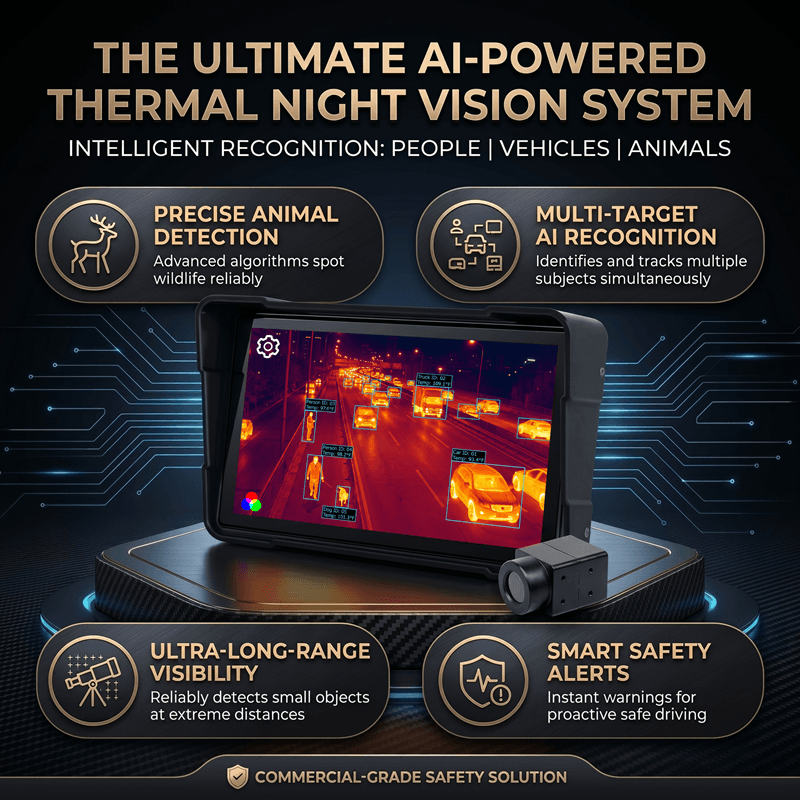
These Thermal imaging cameras are not dependent on any light to perform; instead, they detect heat signatures, allowing them to be used to monitor thermal variations in various environments. All the objects with temperatures above zero release thermal radiation. These cameras can convert infrared radiation emitted by objects into an image to identify objects and their thermal signatures.
Drivers can see those images to quickly analyze which object is in front of the vehicle and make the suitable decision immediately. These cameras also perform comparatively far better in rain, fog, and poor lighting conditions.
A thermal camera looks simple in appearance, but it is much more complex than it seems, especially when considering the various uses of thermal technology. Lenses, sensors, and multiple advanced technologies work together to make it a reliable safety tool in various applications in various industries.
This post explains the thermal camera manufacturing process in detail, including the importance of choosing a thermal camera that fits specific needs and how traditional cameras differ in performance. From sensor fabrication and the development of cooled thermal cameras, engineers focus on enhancing imaging technology to improve the quality of thermal images emitted by all objects. lens assembly for cooled cameras is crucial for optimal performance.y to calibration and quality testing, the manufacturing process goes through several stages. Let us take a closer look at how this process works in the context of thermal camera work.
The Raw Materials: Choosing Lenses for Infrared Thermal Imaging Cameras
Lenses are key components of a thermal camera. Since the camera operates differently from a regular camera, its optical requirements are different.
Thermal cameras detect infrared radiation, which has longer wavelengths than visible light. Regular lenses are not capable of transmitting this infrared energy properly.
Infrared Lens Material Selection
Why Standard Glass Fails: Cooled Thermal vs. Uncooled Lens Materials
The clarity and object detection accuracy of a thermal camera depend on the quality of its lens to a great extent. The lenses of standard cameras perform well in visible light but are useless for infrared thermal imaging cameras. These lenses do not let long-wave infrared radiation pass.
Transmission of light is a crucial factor when choosing an IR optical material for thermal cameras. Manufacturers go with materials of high quality to transmit infrared light more effectively. Regular optical lenses block most of the IR wavelengths, resulting in poor results when using uncooled thermal sensors compared to traditional cameras.
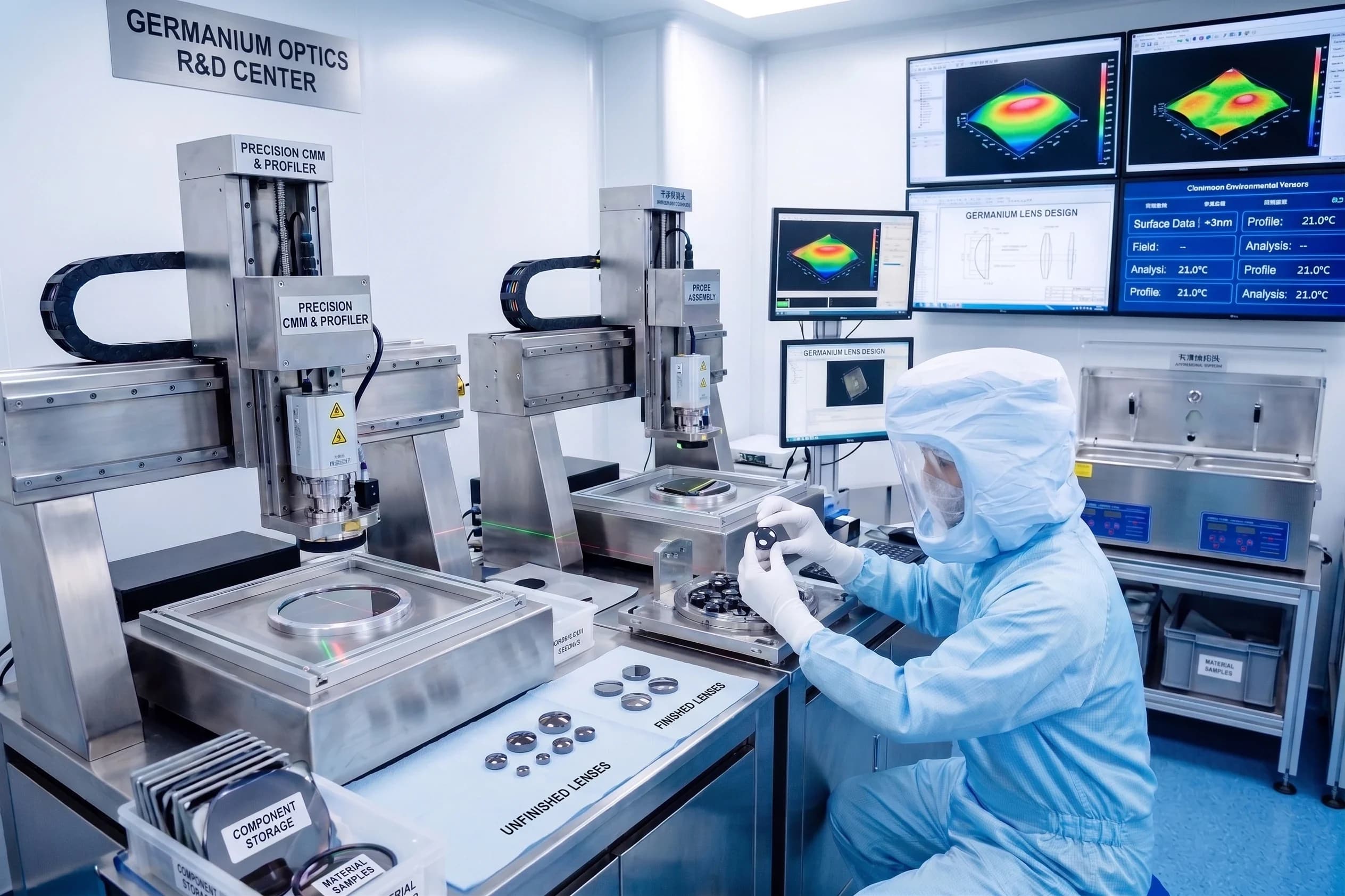
Manufacturers often use specialized infrared materials such as germanium, which transmits in the thermal infrared band and is used in thermal-imaging lens systems.
While germanium remains a top choice, some manufacturers also use cooled cameras for improved thermal imaging performance. chalcogenide glass in certain thermal imaging systems. It is lighter in weight and less expensive. It is generally used in less demanding operating environments, but can still produce a thermal image under optimal conditions.
- It supports excellent transmission of infrared radiation, crucial for infrared and thermal imaging.
- Germanium crystals have a high refractive index that lets manufacturers make thinner and lighter optic lenses.
- Germanium has high mechanical durability.
- It can remain stable across a wide range of expected operating temperatures, supporting consistent transmission of thermal radiation when the lens is properly designed.
- Lenses made of germanium offer high clarity for thermal wavelengths.
- It is easy to achieve accuracy in a germanium lens with machining processes.
Optical Grinding and Diamond Turning for IR lenses
Once you have chosen the lens material, the next step is transforming it into a thermal imager lens that cameras can help provide perfect dimensions. This process requires a high level of experience and precision. A minor issue can affect the focus of infrared radiation and transmission, which may result in measurement inaccuracy and reduced image quality.
Germanium is hard but brittle, so lens manufacturing requires carefully controlled processing.
Therefore, engineers use a specialized machine for precise grinding. The initial geometry of the lens for the thermal imaging camera is formed using an advanced grinding tool suitable for cooled thermal cameras. It etches the germanium material slowly while ensuring dimensional accuracy.
After rough shaping, the camera lens undergoes diamond turning. The process makes sure that the dimensions of the lens are highly accurate. This process involves making the opting surface highly smooth using an advanced diamond-tipped cutting machine for better thermal contrast. It not only improves infrared transmission but also minimizes visual distortion, so users can get sharp images.
The Core Sensor: Capturing Thermal Energy as the Heart of a Thermal Imager
The sensor is the core component of a thermal camera. It functions much like the retina in a human eye. The sensor converts infrared radiation into electrical signals that are processed into a visible thermal image, unlike traditional cameras.
The sensor's quality and sensitivity affect image clarity, detection range, and temperature measurement accuracy to some extent. The performance of the sensor can also affect the responsiveness of real-time imaging, particularly in infrared image processing.
If the sensor quality is not up to the mark, even the finest lenses cannot compensate for its limitations in capturing detailed thermal images. The thermal camera may fail to deliver accurate temperature mapping and clear thermal images if the sensor quality is compromised.
Thermal cameras use highly sensitive detector chips. These chips can respond to small differences in heat emitted by objects, enhancing the capabilities of infrared thermography. However, these chips must operate with high accuracy without any inconsistencies to effectively emit thermal data that can be used to monitor environmental conditions.
Sourcing and Inspecting the Infrared Detector Chip
When sourcing infrared detector chips, manufacturers pay close attention to quality. Manufacturers make sure that they are built using high-quality semiconductor material, such as microbolometers.
A microbolometer detects infrared radiation by measuring temperature-related changes in the detector material's electrical resistance. In a thermal camera, this signal is processed into thermal image data that ordinary visible-light sensors cannot provide.
Engineers perform various tests before integrating the detector chip into a thermal camera. The chip has to undergo various tests to verify its sensitivity, response time, and consistency across different thermal energy sensing arrays.
These inspections aim to find small defects that could affect the performance of the camera at a later stage if ignored, especially regarding the infrared radiation emitted by objects.
Manufacturers replicate real-world thermal conditions to ensure accurate test results. The testing team keeps the performance threshold quite strict. After these tests, manufacturers confirm that the detector chip performs reliably in all conditions.
If a sensor chip fails to meet the requirements, it is rejected immediately. Only stable and accurate sensors are chosen for assembly. The team also does physical inspections. It involves checking the sensor for structural inconsistencies and surface contamination.
After going through all the quality checks, detector chips are sent for approval.
Integrating Circuit Boards and Imaging Devices in a Cleanroom
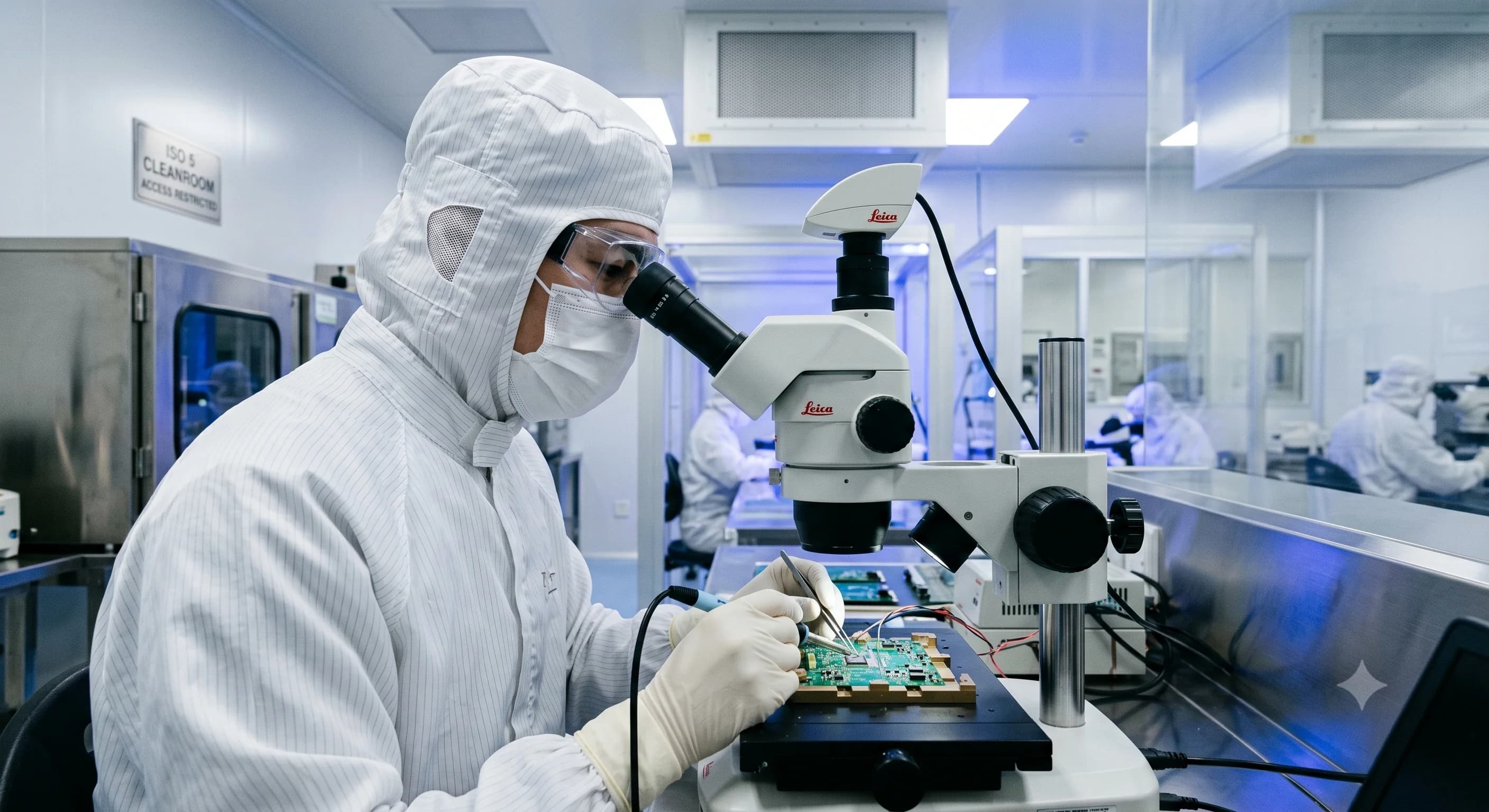
After the detector chip is selected, the engineering team commonly incorporates it into a circuit board assembly. For thermal camera production, this step may be performed in a controlled environment suitable for assembling infrared and thermal devices, depending on supplier process requirements.
Thermal Camera Assembly Preparation
Assembling requires a controlled environment where airborne particles are precisely controlled to ensure optimal performance of imaging devices.
Since the process is complex, engineers carefully connect the sensor to electronic components that process and transmit imaging data in real time. Both robotic systems and experienced engineers work together to mount the detector chip onto the circuit board of the thermography cameras.
Apart from detector modules, engineers also assemble various other components, including power regulation circuits, signal processing electronics, memory systems, thermal management components, and more.
Engineers use advanced micro-soldering or flip-chip technology to align and bond components accurately.
Once the integration process is complete, the complete sensor system goes through additional testing. This inspection aims to test signal integrity and communication with the processing unit of the thermal imager.
The testing team also evaluates the performance of the sensor module under different temperatures and vibration exposure to ensure optimal sensitivity to radiation emitted.
The Assembly Process: Putting Thermal Imaging Systems Together
After manufacturing and testing the lens and electronic components, the thermal camera manufacturing process enters the assembly phase. At this stage, engineers assemble optical, electronic, and mechanical components to turn them into a fully functional thermal camera or thermal imager.
As with every stage of manufacturing, the assembly process requires a high level of attention and accuracy. The professionals involved in the process follow strict procedures and protocols to ensure the reliability of the electrical systems. They make sure that every component is working properly.
How Cameras Work: Connecting the IR Lens with the Core Sensor
Integrating the infrared lens with the detector assembly is a crucial step in thermal camera assembly. Engineers carefully mount the lens onto the optical framework of the camera. They keep the lens at the precise distance from the detector array. After all, a small misalignment can affect the focus and crispness of the image.
Engineers use specialized equipment for alignment and accurate positioning to ensure that the thermal camera can see the intended target clearly. For large-scale production, manufacturers use automated systems that assist in the process of creating handheld thermal cameras.
Once the optical components are connected, technicians perform the focus calibration procedure to enhance the visible image quality. It involves verifying if the sensor is receiving infrared radiation correctly. The team of technicians also evaluates thermal sensitivity, image quality, and uniformity.
Installation of the Heating Element to Prevent Lens Frost
Thermal cameras are used in varied challenging environments. When commercial vehicles operate in snow, fog, and heavy rain, environmental conditions might obstruct the camera lens, resulting in reduced visibility.
To overcome this issue, companies install lens heating systems in commercial vehicle thermal cameras. The heating system is installed near the lens. It keeps the temperature of the lens surface above the surrounding temperature so that moisture cannot condense on the lens, which is crucial for maintaining emissivity. It is quite helpful in preventing lens frost and ice buildup.
With the help of this heating element, cameras can capture clear thermal images on a video even in adverse weather conditions.
Enclosing the Thermal Camera within an Aluminum Housing
After assembling the lenses, sensor, heating system, and other components, the next step is to house the camera in an aluminum case.
Manufacturers use a special, heavy-duty aluminum enclosure for it. It protects sensitive electronic components not only from dust and dirt but also from shock, which is essential for maintaining high thermal sensitivity in thermal cameras used to detect heat signatures.
Generally, manufacturers use a corrosion-resistant aluminum casing to enclose the camera and its electrical and mechanical components, which is crucial for maintaining the integrity of thermal signatures. To seal the aluminum housing properly, engineers use gaskets and O-rings at joints and opening points.
At last, the aluminum housing is tightly secured using industrial-grade fasteners.
Advanced Temperature Measurement & Thermal Camera Work Calibration
Calibration testing is the process of determining whether the thermal camera can accurately measure thermal readings. As the camera measures the object temperature from a distance without physically touching, a calibration process becomes necessary to ensure accuracy. This process aims to test the camera in real conditions.
Understanding Emissivity and Temperature Calibration Using Blackbody Sources
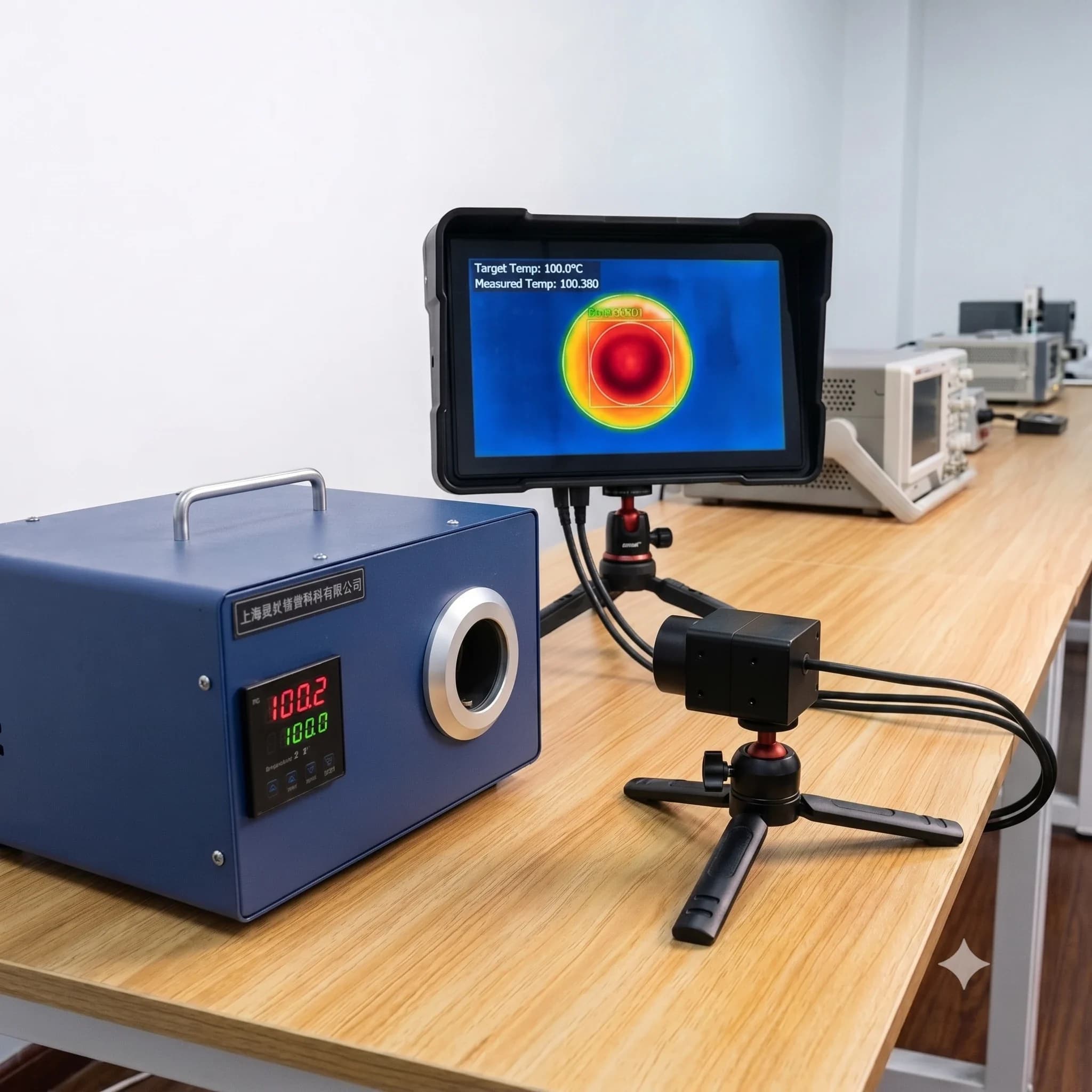
A blackbody source is a device that releases a set amount of infrared radiation at controlled temperatures. The testing team tests the thermal imaging camera in this controlled environment. The thermal camera measures the targets of the blackbody set at different temperatures using infrared technology.
Focusing and Quality Verification
Thereafter, the team compares the thermal heat readings detected by the camera with the known values of the blackbody source to validate the thermal infrared imaging accuracy used to analyze temperature differences.
If they find any difference in the data value, the team makes the necessary calibration adjustments to ensure accurate thermal infrared imaging. It helps the infrared camera correctly convert thermal energy into temperature data.
Automated Optical Focusing & Vision Quality Verification
Manufacturers conduct this test to analyze the image quality of the thermal camera, particularly focusing on the thermal variations it can detect and convert into usable data. They use an automated optical focusing system to align the lens of the camera with the detector array. It makes sure that the thermal camera provides image sharpness to its fullest capacity when using a thermal camera for various applications.
Vision quality verification is conducted using special testing equipment and software designed for cooled infrared cameras. Testers focus on image contrast, clarity, and the thermal signatures detected. If there is any issue related to lens misalignment or image distortion, the system and software automatically detect it.
Testing Infrared Thermal Imaging Cameras for Vehicle Reliability
Heavy trucks operate on long routes. Their drivers often deal with challenging roads and weather conditions. Fog, rain, frost, and dusty, bumpy roads not only make them late to their destination but may also cause safety issues.
Therefore, they can’t rely on any consumer-grade imaging solution that can’t withstand the regular challenges of truck drivers.
To meet the requirements of heavy trucks, manufacturers bring automotive-grade thermal cameras. These cameras are ideal for following an automotive-grade design principle to support various applications of thermal imaging. And they undergo various mechanical and environmental tests.
Thermal Shock Testing: Surviving Extreme Heat & Cold
Long-haul trucks travel through regions with varying climates. At times, thermal cameras operate in harsh hot deserts, while at other times they travel through areas experiencing heavy snowfall.
The variations in temperature can put stress on various components of the camera. It can result in poor camera performance, or the camera can stop functioning at all.
Thermal shock testing analyzes how efficiently the thermal camera tolerates rapid transitions from hot to cold and vice versa, ensuring it can capture detailed thermal images during these variations. In this testing, manufacturers expose thermal cameras multiple times to different temperature extremes.
The testing team checks the camera carefully for any possible performance degradation that could affect its ability to detect thermal phenomena. The attention is primarily given to lens alignment, sealing, housing reliability, and functionality of electronic components in the infrared camera.
A successful thermal shock test ensures that the camera can withstand both extreme heat and cold temperatures while maintaining accurate infrared temperature measurement.
Vibration and Impact Testing for Long-Haul Fleet Operations
Every vehicle generates some level of mechanical vibration due to the engine, road bumps, and suspension system, which can affect the performance of a visible light camera. However, vibration intensity is generally higher in heavy-duty trucks.
In vibration and impact testing, manufacturers assess how a thermal camera reacts to prolonged exposure to vibration. They use a mechanical vibration shaker on which the camera is mounted for a particular period of time to simulate real-world conditions for thermal anomalies. The equipment produces controlled vibration across multiple directions and frequencies.
During this test, manufacturers check for loose fasteners, stress on solder joints, and optical alignment.
Besides vibration testing, manufacturers also perform impact testing to ensure the durability of ir cameras. It mimics the mechanical shock that might come during a truck encountering tough terrain and potholes. The test helps manufacturers evaluate the image quality of the camera after a sudden shock.
Water and Dust Protection Testing
Thermal camera manufacturing involves precise assembly techniques to ensure optimal performance in detecting thermal anomalies. also includes waterproof testing. When trucks operate in snow, rain, and mud, there is a high chance that the installed thermal camera will come into contact with these elements. Even during the eash, there is a risk of moisture penetration that can affect the performance of uncooled thermal sensors.
To address these issues, many automotive-grade thermal cameras come with an IP67 rating. The rating indicates how well the camera is protected against water and dust.
These IP ratings consist of two digits. The first digit, '6,' in the IP67 rating indicates that the thermal camera is completely protected against dust, whereas the second digit, '7,' means the camera can be temporarily submerged in water up to a depth of 1 meter for approximately 30 minutes.
Required ingress protection can vary by vehicle type, installation position and operating environment. For demanding applications, project teams should confirm the target protection level before production or procurement.
Manufacturers perform dust ingress and water immersion tests separately to check whether the camera meets IP67 waterproofing and dust protection requirements.
Proper sealing, gaskets, and design of the enclosure play an important role in making the camera dust and waterproof.
Conclusion: How Detecting Thermal Signatures Improves Fleet Safety
The quality of a thermal camera depends on various factors, and achieving high quality requires the right manufacturing process. With strict checks at every stage of thermal camera manufacturing, high quality can be achieved.
From component selection and assembly to calibration and various tests, a dedicated team should strictly follow industry-established manufacturing standards, especially in the use of thermal imaging.
Using a well-manufactured thermal camera, truck fleets can confidently operate in harsh conditions. Drivers can detect the presence of all objects and hazards easily, especially at night, thanks to thermal imaging technology. A good quality camera enhances overall road safety by allowing drivers to detect the presence of hazards.
The Value of Strict Quality Control
Strict quality control plays an important role in thermal camera manufacturing. It helps ensure that the camera performs as expected before it is installed on a commercial vehicle.
Environmental testing and verification are carried out to identify potential manufacturing defects and performance issues. If a problem is found during testing, it can be corrected before the camera is deployed in real-world operating conditions to ensure it can effectively detect thermal phenomena.
How Thermal Camera Manufacturing Can Support Fleet Safety
Better manufacturing of thermal cameras means better object detection and image quality in various challenging conditions, especially under temperature variations. It helps fleet owners drive down their costs in several ways, including improved thermal contrast.
High-quality thermal cameras improve driving safety in poor lighting and visibility by detecting temperature differences. This means fewer accidents and repairs when using infrared technology. Furthermore, reduced breakdowns mean less downtime, which also improves fleet productivity by utilizing advanced thermal imaging technology. It means low expenses and more productivity.If you are in search of automotive-grade thermal cameras for your commercial fleet, contact us to learn about the advantages of thermal imaging. Distar Mobility now. Our team will be happy to provide a live demo. Get expert guidance on choosing the right thermal imaging cameras for your fleet.