Introduction
Today, we all stay glued to our smart devices for information and entertainment, which has become crucial for enhancing student transportation. High-speed internet and readily available streaming services have made it easy to access our favourite content anytime.
It would not be wrong to mention that people have become highly dependent on digital entertainment, especially during their commutes using fixed-route service. In fact, they don't want to miss out on it during a long bus journey. They want a stable entertainment system on a running bus service that can keep them entertained throughout the trip with video streaming options, ultimately boosting ridership.
Consequently, it has become necessary for tour operators to arrange a system that can take care of the entertainment needs of the passengers, utilizing on-demand services. Well, video-on-demand (VOD) seems like an ideal solution.
Passengers nowadays avoid getting on tour buses that don't offer the same digital entertainment and real-time monitoring that they experience in their daily lives. As a result, bus operators, transportation companies, and coach service providers have started offering personal entertainment on their tour buses, adapting to the needs of modern microtransit and improving passenger safety.
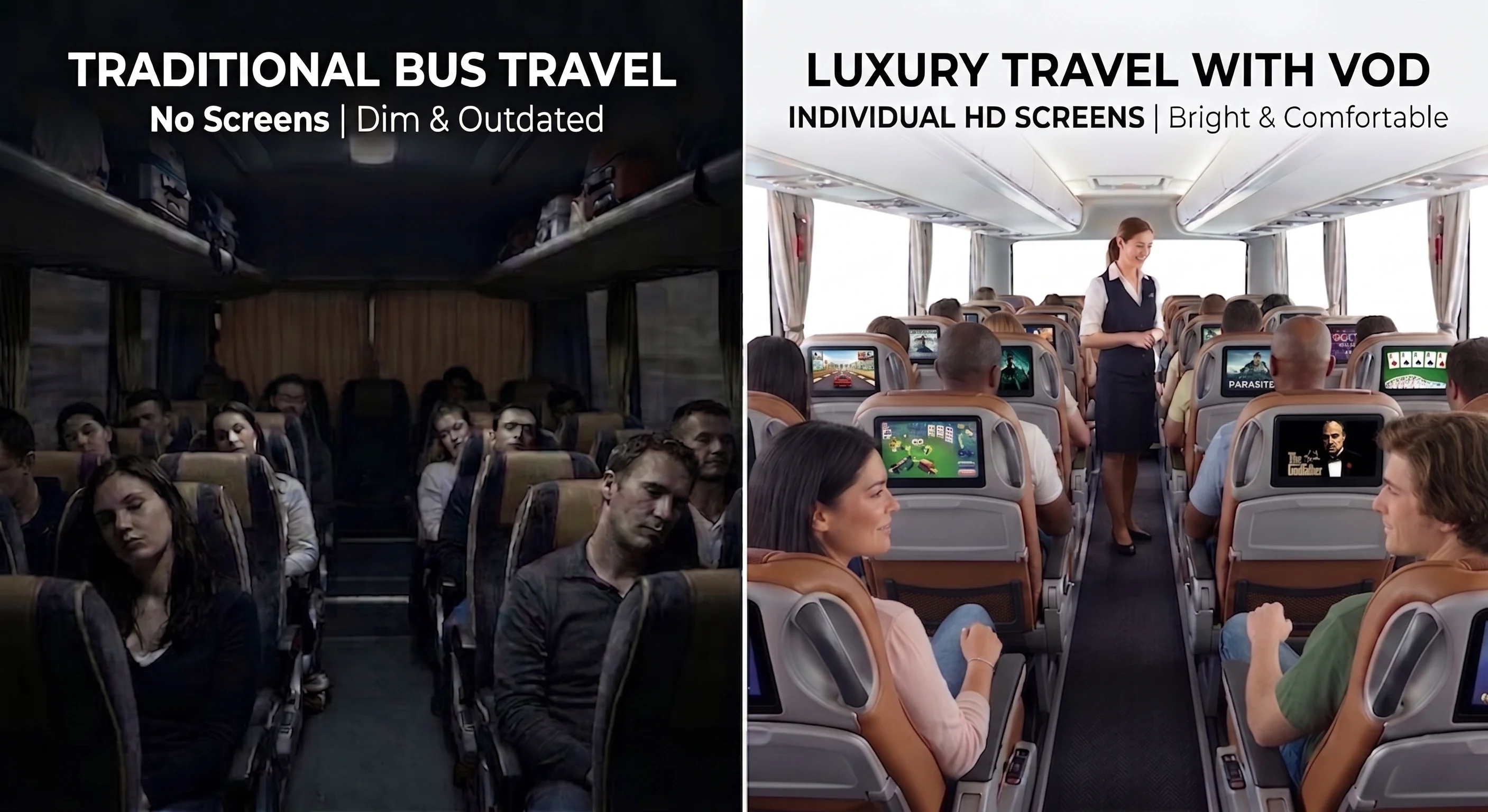
It's not a new concept to provide a screen in tour buses for entertainment. In the past, transport operators used to provide shared televisions for entertainment on long road journeys, lacking the real-time monitoring capabilities of today's systems.
Unfortunately, these shared TV sets were not as intelligent as today's Video-on-Demand (VOD) entertainment systems. They were unable to satisfy the personalized demands of passengers.Let’s get to know more about this in-vehicle entertainment system that can enhance the DRT experience.
Why Traditional Transit and Bus Service TVs Fail Modern Passengers
You may still find shared flat-screen TVs in some budget fleet buses, but they lack the personalised experience offered by new technology. However, today they are mainly used for making announcements and providing route information to passengers.
These systems are no longer appropriate for today's passenger for a variety of reasons:
Lack of Content Choices
The lack of content choices was the biggest drawback of conventional shared public TVs. Tour operators used to play content that every passenger had to watch, whether they liked it or not, but now they can leverage DRT to offer personalized viewing options. Rather than entertainment, sometimes, it would become a frustrating experience.
No On-demand Control
Old bus screens did not provide viewers with any control, which limited the ability to personalise their viewing experience, unlike modern shared mobility solutions. Since the passengers could not take direct control over the system, they were unable to change the content, which limited their engagement with the on-demand services.
Disturbance to Other Passengers
Not every traveller prefers to watch video streaming content during a long bus journey, as some may prefer to enjoy the scenery instead. Some want to rest or enjoy the outside view while using the advanced connectivity features on board. On older tour buses, this used to be problematic at times, especially for bus services that relied on outdated technology, impacting the safety system and hindering DRT capabilities. Audio played through external speakers was heard by everyone, which often led to complaints about noise.
Inside the Tech: How On-Demand Services and Video Streaming Work Together
Video-on-demand systems use a combination of technologies to provide passengers with personalized yet stable entertainment. These systems consist of various components, including a camera system and recorder, that help operators deliver content without any trouble within a moving bus.
Wondering how the transport system makes this possible?
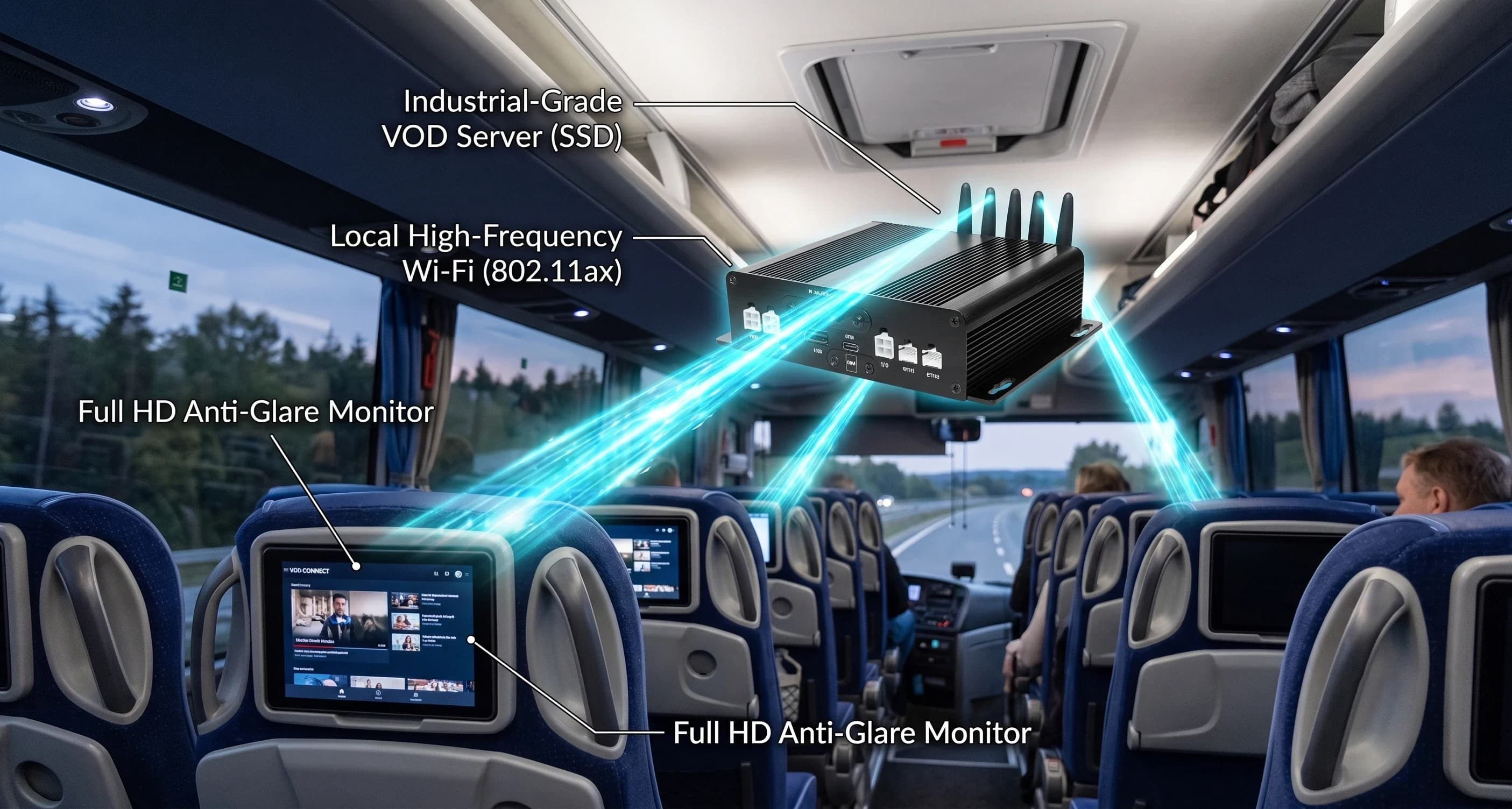
The VOD system makes this possible through two main components:
- In-vehicle VOD server
- Smart screens equipped with analytics capabilities can provide insights into passenger preferences and engagement.
Onboard VOD System Components
In-Vehicle Server
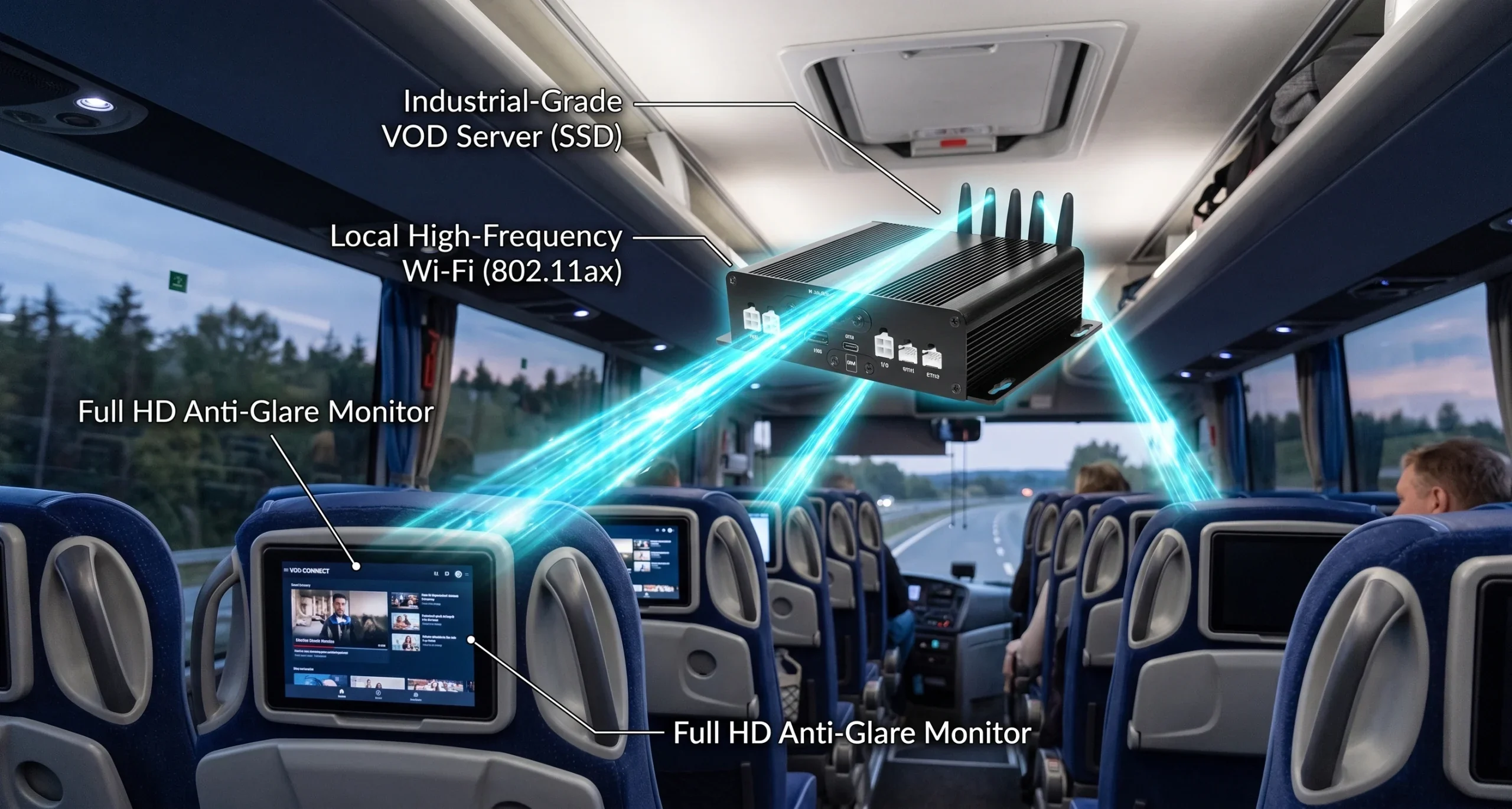
You can think of this as the brain of the VOD system. This is the main unit that stores, controls, and sends the digital content to all the screens that are mounted, ensuring a seamless video streaming experience for school districts. The server is used to share multimedia information, like video, audio, e-books, images, and so on.
The in-vehicle server is designed to withstand vehicle operating conditions, making it ideal for use in school buses and enhancing student transportation in sparsely populated areas. Since it is made of high-grade hardware, the server can endure vibrations from bumpy roads and sudden jolts.
The server uses solid-state drives for storage. These drives are comparatively better at enduring shocks and bumps, ensuring better uptime during travel.
Content is stored in the in-vehicle server, which enhances accessibility for all passengers and allows for real-time monitoring of entertainment options. It offers an opportunity for passengers to watch content without the need to use external internet services, aligning with DRT principles. All content is local, so travellers don't rely on external Internet services to access content.
The VOD server also produces a Wi-Fi hotspot within the vehicle, enhancing the DRT experience for passengers. It operates at high frequencies and accommodates multiple users altogether, making it suitable for both school bus and transit applications. All users can watch content with minimal buffering and interruption, thanks to advanced analytics that optimise streaming performance over 4g connections.
The hotspot connection also allows users to connect their seats to their personal devices for more personalization and access to on-demand bus entertainment. Modern VOD servers also provide various features to operators. They can take advantage of GPS integration, internet sharing, centralized content updates, and more to create a cost-effective service for their customers, especially with the implementation of DRT.
Smart Seatback Screens: Moving Beyond BYOD to Live Video Streaming
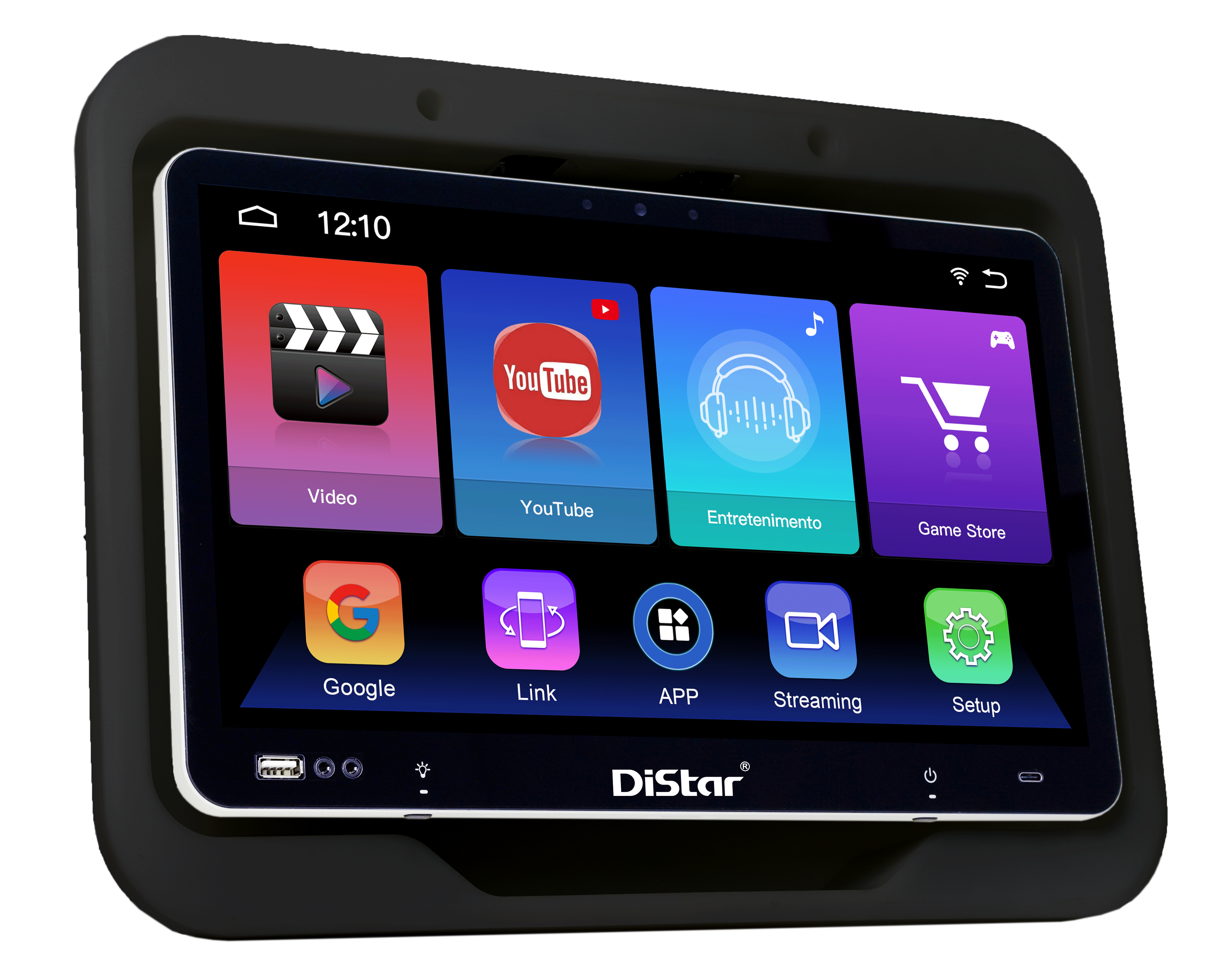
These are smartscreens on seatbacks that complete the VOD system, providing scalable entertainment options for all passengers. These are interactive touch points allowing users to take control of the entertainment system with a few taps on the screen.
Passengers can easily browse and make choices of content. These displays not only entertain but also give real-time information on the bus's location and other travel information, increasing accessibility for all passengers. The screen also has a USB port to charge your smart devices on the go, making it easier for passengers to use their own video streaming apps while enjoying the transit service.
Bus operators who want to provide more personalization can take advantage of the system’s BYOD (Bring Your Own Device) feature, enhancing the overall transit experience. It enables passengers to connect straight to the VOD system using Wi-Fi on their smartphones. Users can access content on their own devices without using the mounted screens, improving the overall efficiency of the service per passenger.
All in all, the VOD server and smart screens together create an advanced entertainment system for passengers, enhancing their experience during shared mobility.
Maximizing Fleet ROI: From Passenger Booking to Interactive On-Demand Features
Modern VOD systems are more than a basic onboard entertainment system; they are integral to enhancing the efficiency of bus transportation and ensuring compatibility with other technologies. They turn a regular bus journey into a luxury experience with features like GPS tracking and real-time monitoring. The VOD system creates an interactive ecosystem that fulfills the entertainment needs of each passenger on the bus. They also deliver operational value to bus operators.
Some advantages of interactive VOD systems include:
Massive Content Library Management
Tour operators can build a comprehensive content library for their VOD system. They can expand it and keep it fresh through USB upload or wireless syncing. Operators can keep adding new movies, music, games, etc., so that passengers can find the content of their choice.
The content library lets tour operators provide a variety of content so every viewer can find relevant content regardless of their age and choice.
The entertainment system can also be linked to your Bluetooth or wired headset/earphone for a more customized experience, making it cost-effective for all users.
Integrated Passenger Services
Modern VOD systems have moved far ahead of traditional entertainment systems. Apart from entertaining passengers, they offer various integrated passenger services. Individuals can order various onboard services through the screen.
It allows premium tour operators to provide the facility of ordering snacks and beverages through mounted touchscreens. Passengers no longer need to call or walk up to staff for assistance.
Since the system supports integrated GPS functionality, it also shows the current vehicle location, remaining travel time, and even weather updates. It keeps the passenger informed throughout the journey.
Multilingual Support & Advertising Services
Tour companies have to serve passengers from different nationalities, ensuring that their bus solutions cater to diverse entertainment needs within the transit network. Sometimes, due to a language barrier, there could be a communication gap, which can be addressed through live video streaming services that enhance passenger safety and provide real-time visibility for drivers.
A VOD system can be a great help in such a scenario, allowing transit operators to personalise the viewing experience for each commuter. Most modern systems come with a multilingual interface that supports all prominent languages of the world, enhancing connectivity for users.
Passengers can choose their preferred language for smooth communication and interaction, enhancing their experience on public transport services.
The VOD system is not just for entertaining onboarders. It brings various advertising opportunities for tour operators that can help them earn some side income through cost-effective promotions.
Tour companies can advertise their tour packages and upcoming trips through the VOD system, leveraging on-demand services to reach potential customers in urban centers. All passengers will see them on their mounted screens, which can also display live video streaming of the journey.
Differentiated Integration: The Deep Fusion of Service and Safety
Indeed, the video-on-demand system is primarily designed to provide entertainment. However, when combined with other technologies, it can become an important tool to improve bus safety.
Tour operators who want to make their vehicles entertaining and safe at the same time can go for a fusion of safety and service that includes GPS tracking, eco-friendly technologies, and DRT. Safety features you can integrate with the VOD system include responsive alerts for driver’s assistance.
Safety Override Function
This feature could be life-saving in emergencies. It allows drivers to make necessary safety announcements in no time, which is crucial for maintaining DRT standards.
As the driver announces their message, the mounted screens automatically pause their existing activity so that all passengers can understand the statement.Drivers can use this feature to announce weather warnings, sudden route changes, and onboard emergencies. To integrate this feature into a vehicle, you will need to connect the VOD system to the vehicle’s control unit that receives safety inputs continuously, similar to a bus cameras setup.
Integration of Synchronized Surveillance Feed for Extra Security
VOD Systems can also add a layer of transparency and security in recreational vehicles and specially chartered buses, ensuring a safe fleet. They can be used to provide synchronized surveillance feeds to drivers, enhancing their ability to respond to emergencies. Using these feeds, drivers can get real-time information about road conditions and make quick decisions in emergencies, enhancing DRT effectiveness.
For premium buses, VOD, passenger screens, surveillance video and driver-safety systems should be planned as separate but coordinated onboard systems. This helps operators improve passenger experience while keeping safety-related workflows clear.
Versatile Deployments: Serving Diverse Service Areas from School Bus Fleets to Luxury Coaches
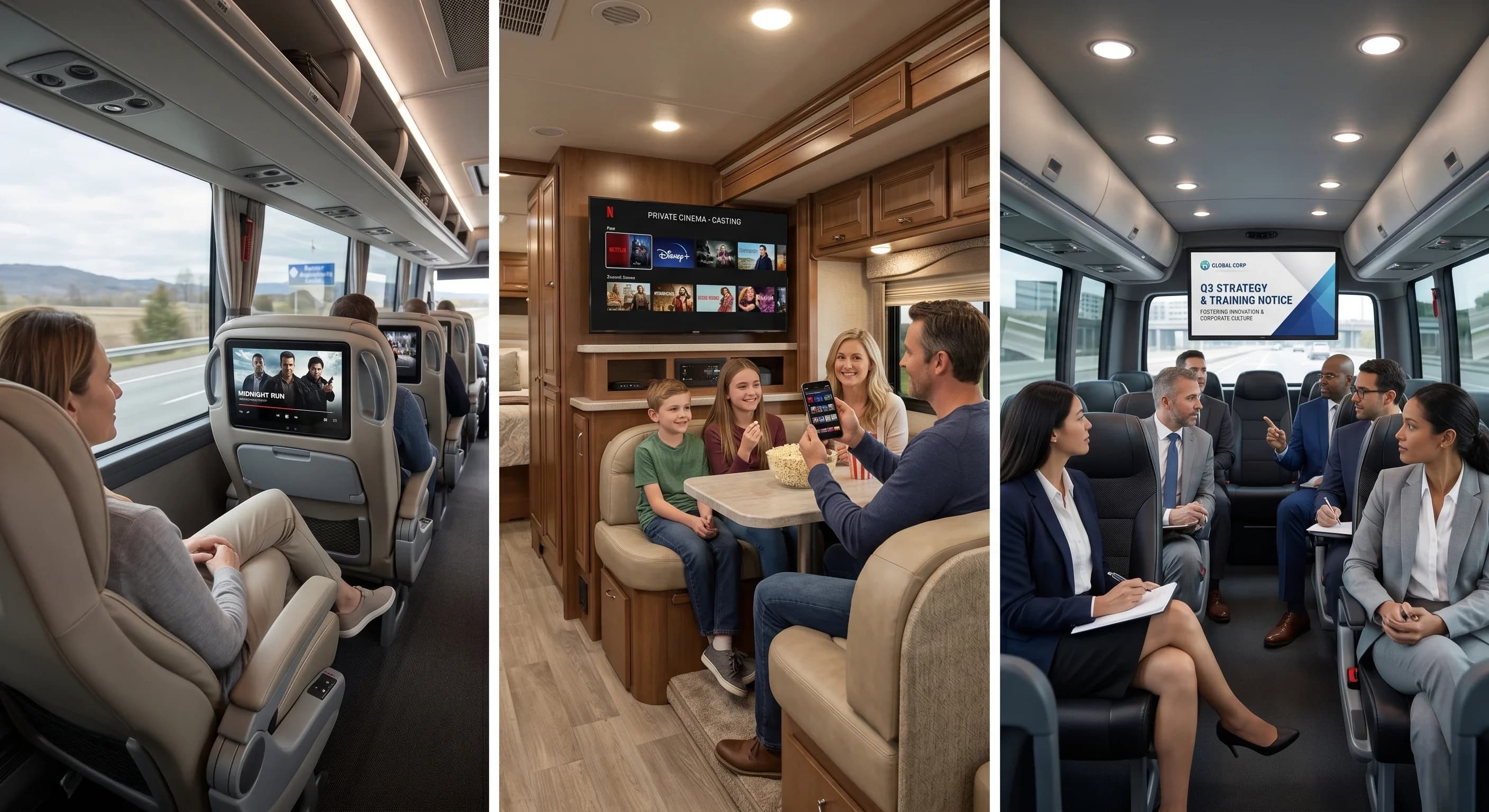
VOD systems can be used across different transportation scenarios, including school bus video applications, thanks to their easy adaptability and focus on student safety.
Final Words: Turn Your Travel Time into Entertainment Time with VOD System
Premium travel is no longer about comfortable seats with good leg space only; it now includes responsive entertainment options. Travellers nowadays look for a personalized and engaging experience as well. And a video-on-demand system helps you provide that.
The system provides digital entertainment, real-time travel updates, and communication support, all aimed at improving student safety and enhancing the overall experience for transit agencies. These things make the journey luxurious and safe.
For bus fleet operators, the VOD system brings a lot of opportunities, especially in optimizing routes with DRT. It helps them boost their brand value, increase their customer base, and promote their services through the system's advertising capabilities, particularly in relation to DRT.
Conclusion: Building a Better Passenger Entertainment Experience
VOD systems continue to evolve as onboard networks, passenger screens and content workflows become easier to coordinate. For premium transportation operators, the goal is to deliver a more flexible entertainment experience while keeping system management practical. To discuss a bus entertainment project, share your vehicle type, screen layout and content management needs with Distar Mobility.