The "Nerve Center" of Modern Fleet Management
From Single to Integrated
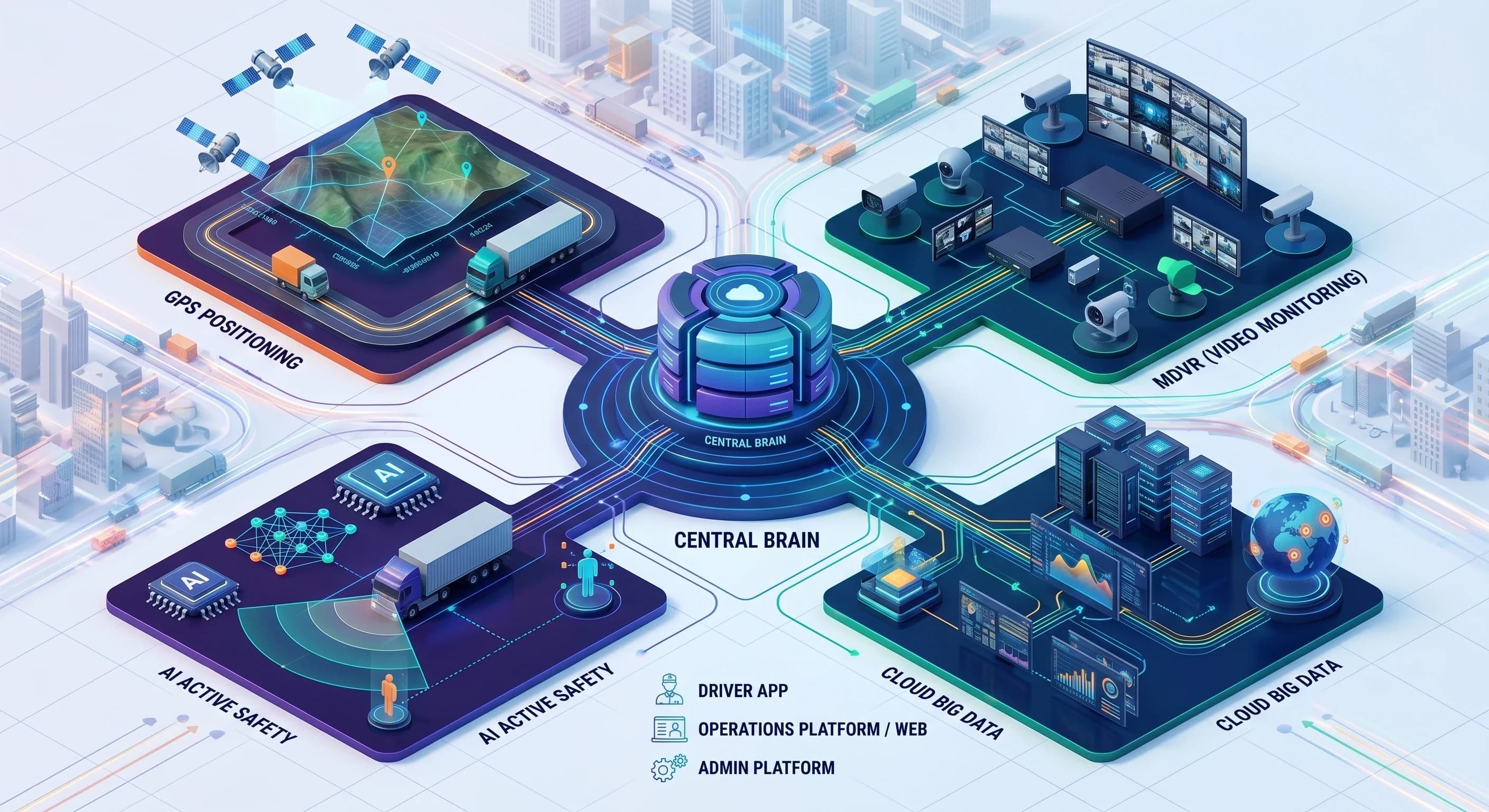
GPS and MDVR Platform Overview
Traditional GPS tracking systems were originally designed to answer one question: Where is the vehicle?
While location tracking remains important, modern fleet operations require much more than position data. Fleet managers must monitor safety, compliance, driver performance, passenger experience, and operational efficiency at the same time.
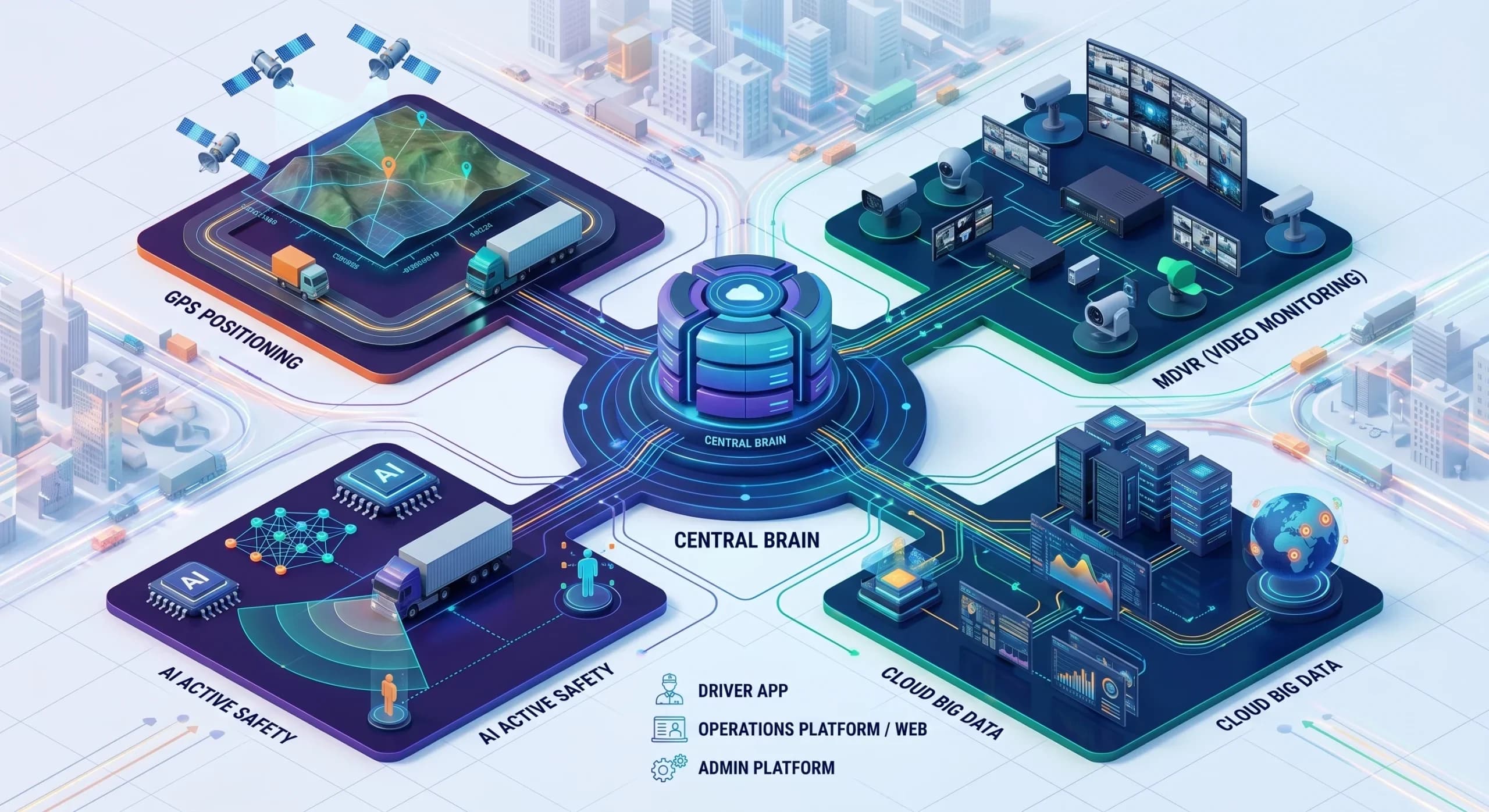
Integrated monitoring platforms combine GPS tracking, video surveillance, AI-powered safety technologies, and cloud analytics into a single solution. This allows operators to move beyond basic tracking and make decisions based on real-time operational intelligence.
For modern transportation companies, this shift is essential. A vehicle is no longer just a moving asset on a map. GPS & MDVR is part of a connected system that produces safety data, service records, video evidence, driver behavior reports, and operational insights.
The Role of GPS & MDVR
Mobile Digital Video Recorders (MDVR) add an important visual layer to fleet management.
GPS data can show where an event occurred. Video footage can show why it happened.
In the event of an accident, customer complaint, insurance claim, or safety investigation, synchronized video evidence helps managers understand the situation quickly and accurately.
MDVR systems record and store video from multiple cameras throughout the vehicle, improving accountability, safety management, and operational transparency.
This is especially valuable for buses, trucks, construction vehicles, school buses, and long-haul fleets, where managers cannot rely only on driver reports or basic tracking data.
Core Value Proposition
An integrated GPS and MDVR platform delivers three key benefits.
First, it provides real-time monitoring of vehicles and drivers.
Second, it creates reliable evidence through synchronized video and location records.
Third, it generates actionable insights through reporting, analytics, and driver behavior evaluation.
Together, these capabilities help transportation companies make faster and better operational decisions. Instead of reacting after problems occur, managers can identify risks earlier, improve training, and optimize daily operations.
Industrial-Grade In-Vehicle MDVR Terminals
Extreme Environment Resilience
Commercial vehicles operate under demanding conditions every day.
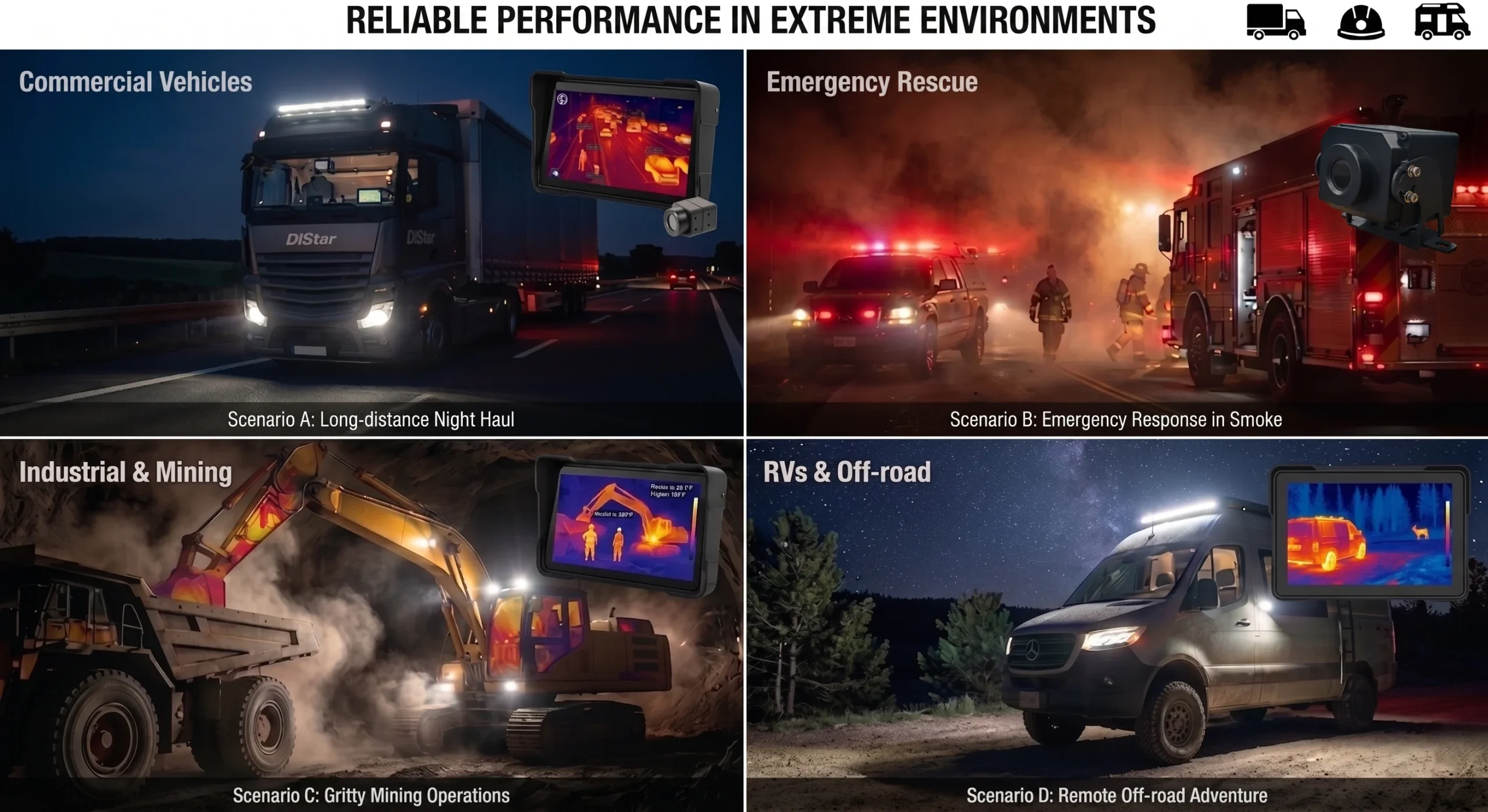
Industrial-grade MDVR terminals are designed to provide reliable performance in long-haul transport, public transportation, mining, construction, and other challenging environments.
Unlike consumer-grade devices, industrial systems must withstand vibration, temperature changes, unstable power supply, and continuous operation.
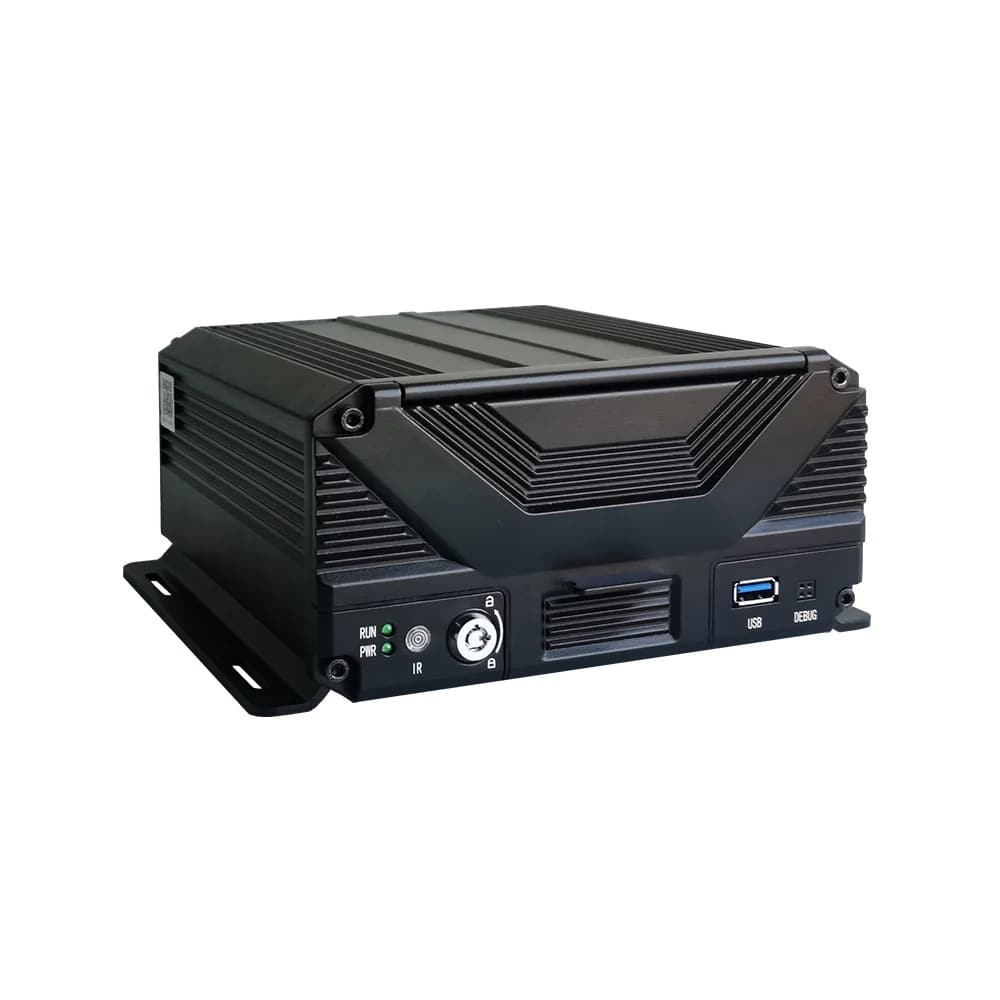
Vehicle Monitoring Inputs
Road vibration can damage equipment and interrupt recordings.
Industrial-grade MDVR systems use anti-vibration technologies that help protect critical components and maintain recording stability under difficult operating conditions.
This improves reliability and helps ensure important evidence remains available when needed.
For fleets operating on rough roads, construction sites, or long-distance routes, this durability can reduce equipment failure and lower maintenance pressure.
Different vehicle categories use different electrical systems.
Wide voltage input capability allows MDVR terminals to operate across buses, trucks, construction equipment, excavators, and specialized vehicles without extensive modifications.
This simplifies deployment and supports fleet expansion. For companies managing mixed fleets, hardware flexibility is important because it reduces installation complexity and helps standardize management across different vehicle types.
Multi-Channel Perceptual Inputs
Modern fleet operators need visibility inside and outside the vehicle.
Multi-channel monitoring provides a complete view of driver activity, passengers, cargo, and surrounding traffic conditions.
This creates stronger situational awareness and gives fleet managers a clearer understanding of what happens during daily operations.
Industrial-grade MDVR platforms support both Analog High Definition (AHD) and IP cameras.
This flexibility allows organizations to create monitoring configurations that match their operational requirements while improving safety management.
For example, a city bus may require cabin cameras, rear-view cameras, passenger counting cameras, and external cameras. A logistics truck may need cargo-area monitoring, driver-facing cameras, and road-facing cameras.
One platform can support different camera layouts for different vehicle scenarios.
Poor visibility creates significant transportation risks.
Thermal imaging technology helps operators detect pedestrians, vehicles, animals, and obstacles in darkness, fog, smoke, rain, or dust.
By identifying heat signatures rather than relying only on visible light, infrared cameras support all-weather operations and improve nighttime safety.
This function is especially valuable for emergency vehicles, hazardous transport, mining vehicles, and long-haul freight operations where low visibility can create serious safety risks.
Storage and Transmission
Reliable storage is essential for effective fleet management.
Industrial-grade MDVR systems support redundant storage through SD cards and hard drives, helping protect critical recordings from loss.
Using 4G, 5G, and Wi-Fi connectivity, important video clips and event data can also be uploaded automatically to cloud platforms. This enables faster access and stronger operational reliability.
When incidents occur, managers do not need to wait until the vehicle returns to the depot. They can review key evidence remotely and respond faster.
All-Around Digital Monitoring
High-Precision Location-Based Services (GPS/BDS)
GPS and BeiDou (BDS) technologies provide accurate vehicle tracking in real time.
Fleet managers can monitor locations, review routes, analyze mileage, and improve dispatch efficiency.
Geofencing functions create virtual boundaries that automatically generate alerts when vehicles enter or leave designated areas. This helps prevent unauthorized vehicle use, route deviation, and out-of-bounds operations.
Historical route playback also helps operators verify service performance and investigate incidents using synchronized location and video records. For public transportation, route tracking improves punctuality and dispatch management. For logistics fleets, it supports delivery verification and route optimization.
Remote Video Dispatch & Command
Modern transportation operations require more than location tracking.
Through centralized monitoring platforms, operators can access live video streams from multiple vehicle cameras, creating greater visibility into operating conditions.
This is useful during accidents, traffic congestion, passenger disputes, cargo incidents, and emergency situations.
Many solutions also support two-way voice communication, allowing supervisors to coordinate responses, provide instructions, and improve operational control in real time.
By combining real-time video, GPS positioning, and voice communication, the control center becomes more than a tracking office. It becomes an operational command center.
AI-Driven Active Safety (ADAS & DSM)
Human error remains one of the leading causes of commercial vehicle accidents.
AI-powered active safety systems help identify risks before accidents occur.
These systems do not replace drivers. They support drivers by providing additional warnings, monitoring attention levels, and helping operators build safer driving habits.
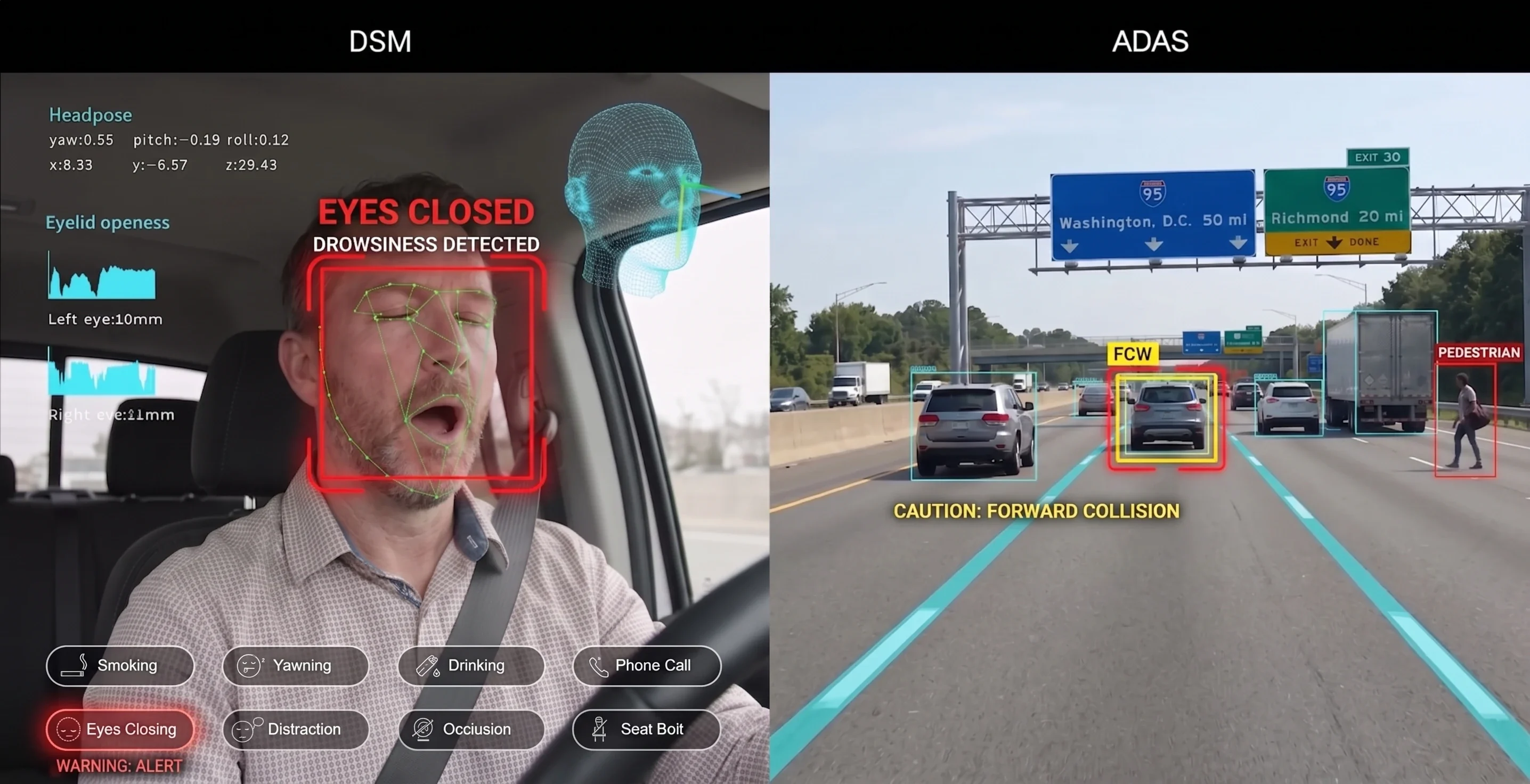
Driver Safety and Road Monitoring
Driver Monitoring System (DSM)
Driver fatigue remains one of the leading safety concerns in commercial transportation.
Driver fatigue remains an important fleet safety concern, especially in long working hours and repetitive routes. Early fatigue-risk alerts can support fleet safety management when used with clear operating policies and driver coaching.
Using AI-powered analysis, DSM systems monitor driver alertness and identify signs of fatigue, reduced concentration, delayed reactions, or other potentially risky behaviors.
When warning signs appear, the system can generate alerts that help drivers refocus before a dangerous situation develops.
Importantly, these systems are designed to improve driver safety rather than invade personal privacy. Data processing should comply with applicable regulations and company policies, ensuring responsible and transparent use of information.
Advanced Driver Assistance Systems (ADAS)
ADAS technologies help drivers identify hazards before collisions occur.
Key functions include Forward Collision Warning (FCW), Lane Departure Warning (LDW), and other intelligent safety alerts.
According to research from the IIHS FCW/AEB study, Forward Collision Warning reduced rear-end striking crash involvement rates by 27%, while systems combining collision warning and automatic emergency braking achieved reductions of up to 50%.
For fleet operators, fewer accidents translate directly into lower repair costs, reduced downtime, improved safety performance, and stronger customer confidence.
Instead of reacting after accidents happen, ADAS helps prevent many incidents before they occur.
Blind Spot Detection & Warning (BSD)
Large commercial vehicles have significant blind spots.
BSD systems monitor difficult-to-see areas and generate warnings when nearby vehicles, cyclists, or pedestrians enter risk zones.
This technology improves safety during turns, lane changes, reversing operations, and urban driving conditions.
For buses and heavy-duty vehicles, blind spot detection is particularly valuable because these vehicles often operate close to pedestrians, motorcycles, bicycles, and other vulnerable road users.
Cloud-Based Big Data Management
Multi-Terminal Collaboration
Modern fleet management requires access to information from anywhere.
Cloud-based platforms allow managers to monitor operations through web dashboards, desktop software, and mobile applications. Information remains synchronized across devices, ensuring users always have access to the latest operational data.
This flexibility improves responsiveness and enables faster decision-making throughout the organization.
Managers can review alerts, monitor live video, check vehicle status, analyze reports, and coordinate field operations without being limited to one physical office.
Alarm Evidence Management Center
Accidents and safety incidents require reliable evidence.
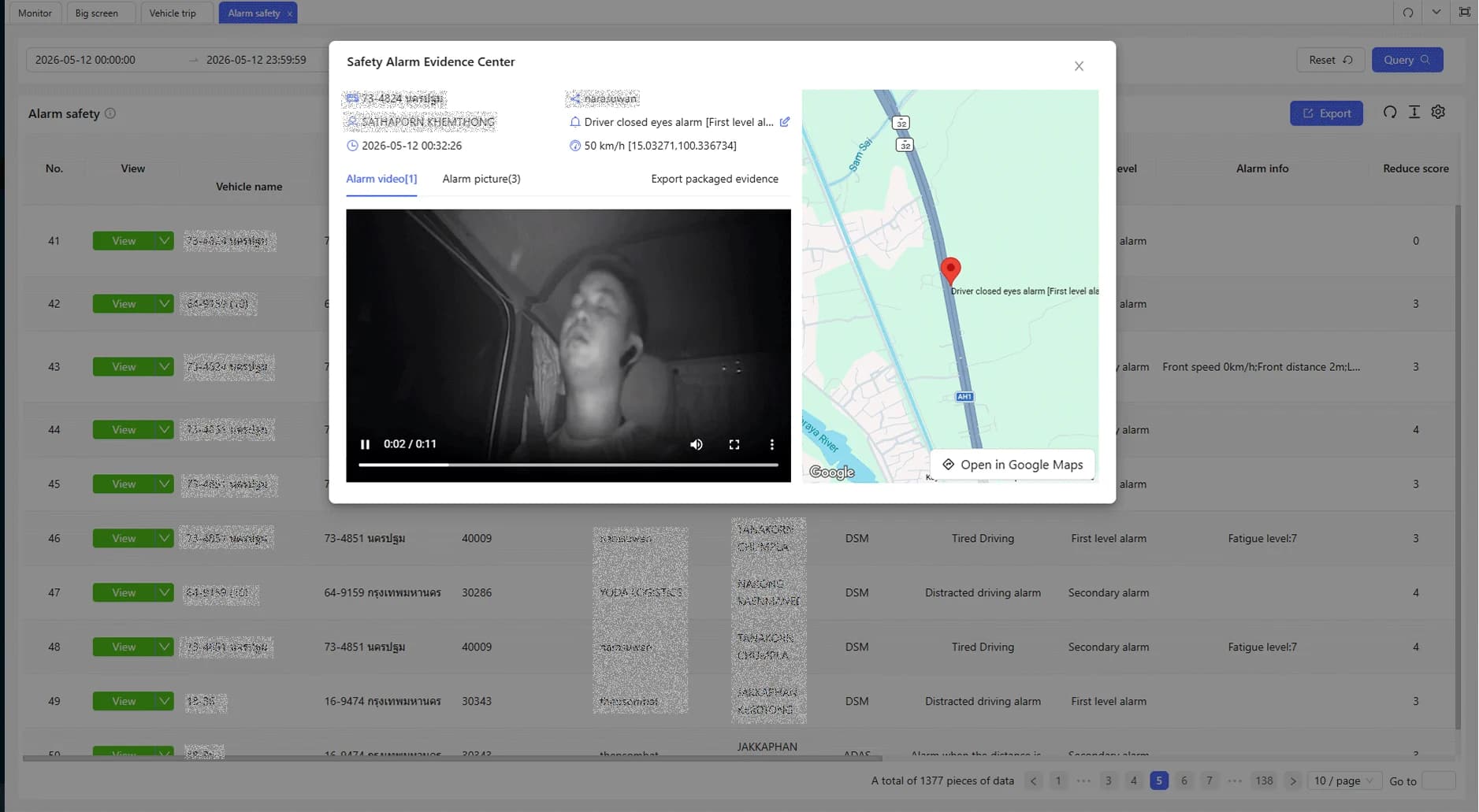
When events such as collisions, speeding violations, harsh braking, SOS alerts, or ADAS warnings occur, the platform automatically stores and protects the relevant video clips and operational data.
Because footage is linked directly to GPS records, timestamps, and vehicle information, managers can quickly investigate incidents and support insurance claims, compliance reviews, and internal safety assessments.
Instead of spending hours searching through recordings, operators can access critical evidence within minutes. This improves transparency, reduces dispute time, and helps organizations make decisions based on facts rather than assumptions.
Driver Behavior Scoring System
Data becomes more valuable when it can be transformed into actionable insights.
A Driver Behavior Scoring System analyzes driving habits using information collected from GPS tracking, MDVR recordings, ADAS alerts, DSM warnings, and operational reports.
Factors such as speeding, harsh braking, rapid acceleration, fatigue-related warnings, and route compliance can be evaluated through automated scoring models.
Application Scenarios
Fleet operators frequently report measurable improvements after implementing driver monitoring programs. In many cases, harsh braking, speeding, and aggressive driving events decrease by 20% to 40% within the first months of deployment.
By identifying trends and providing targeted coaching opportunities, organizations can improve safety performance while reducing operational risks.
This also supports fairer driver management. Instead of relying only on subjective judgment, managers can use data-based reports to recognize safe drivers and provide training where needed.
Targeted Solutions
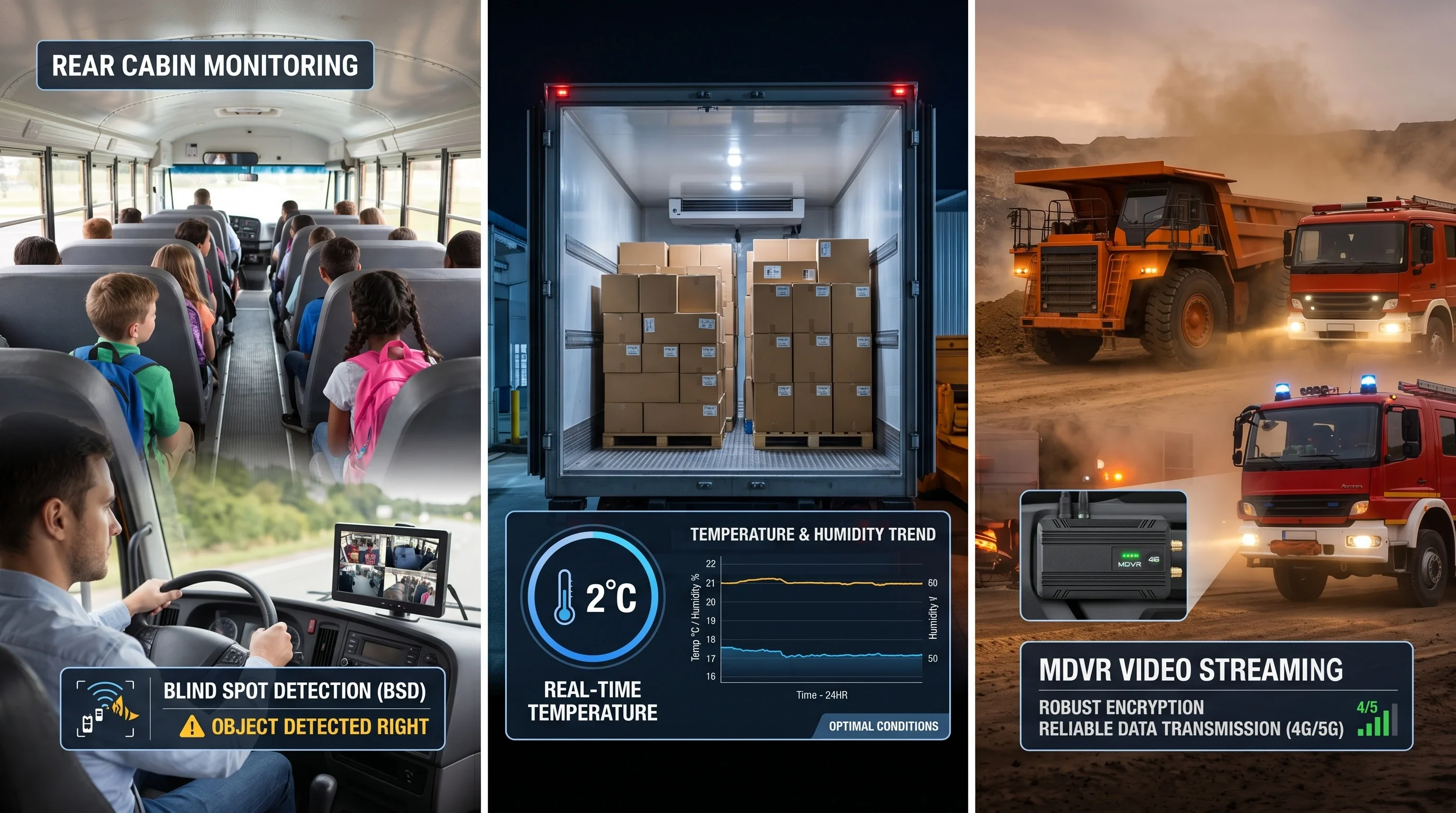
Transit Buses & School Buses
Public transportation requires a combination of safety, visibility, and operational efficiency.
Integrated monitoring platforms support real-time vehicle tracking, cabin surveillance, passenger counting systems, route management, and driver monitoring functions.
In passenger transit projects, a platform may support functions such as dispatch management, GPS tracking, CCTV, driver monitoring, passenger counting, route planning, smart monitoring, and report analysis, depending on project configuration.
These tools help transportation providers improve service quality while maintaining a safer environment for passengers and drivers.
For school buses, the value is even clearer. Real-time location tracking, cabin monitoring, and driver safety alerts help operators protect students and provide better accountability for parents, schools, and transport authorities.
Freight & Cold Chain Logistics
Logistics operators face unique challenges related to cargo protection, delivery schedules, and operational efficiency.
By combining GPS tracking, video monitoring, route optimization, and environmental sensors, fleet managers gain greater control over transportation processes.
For cold chain operations, temperature and humidity monitoring can help protect sensitive goods such as food, medicine, and biological materials.
If temperature conditions move outside a safe range, operators can receive alerts and take action before cargo quality is affected.
This improves compliance, protects customer trust, and reduces financial losses caused by damaged goods.
Specialized & Emergency Vehicles
Emergency response vehicles, construction equipment, mining vehicles, and other specialized fleets often operate in difficult environments.
Thermal imaging technology provides additional visibility in darkness, smoke, fog, and other low-visibility conditions.
Combined with GPS tracking and real-time video monitoring, operators can maintain greater situational awareness and improve safety during critical operations.
For emergency vehicles, live video feedback can support command decisions. For mining and construction fleets, rugged MDVR hardware and multi-camera monitoring help reduce blind spots and improve worksite safety.
Commercial Advantages and Future Vision
Operational Value Review
Technology investments must deliver measurable business value.
For many fleet operators, the benefits of integrated GPS, MDVR, ADAS, and DSM systems extend far beyond safety improvements.
IIHS large-truck study research on large trucks found that vehicles equipped with Forward Collision Warning had 22% fewer crashes than comparable trucks without the technology. The same research also found meaningful reductions in rear-end crash rates.
Fewer accidents lead to lower repair costs, reduced downtime, improved vehicle utilization, and stronger operational efficiency.
In addition, fleet management benchmarks indicate that aggressive driving behaviors can increase fuel consumption by 10% or more. Monitoring and coaching programs help reduce unnecessary fuel expenses while improving safety performance.
As a result, many organizations can recover equipment and implementation costs within approximately 12 months through accident reduction, fuel savings, insurance benefits, and operational optimization.
Regulatory Compliance Support
Regulatory requirements continue to evolve across the transportation industry.
Integrated monitoring platforms can support internal compliance review where required records are configured correctly and local operating requirements are understood.
These features can support internal management objectives and external reporting workflows, while improving accountability when the data structure is configured correctly.
For transport operators working with public agencies, schools, logistics customers, or hazardous cargo, clear data records can become a major operational advantage.
Future vision
The future of transportation will be increasingly connected, intelligent, and data-driven.
Technologies such as artificial intelligence, thermal imaging, cloud computing, big data analytics, APIs, and Vehicle-to-Everything (V2X) communication will continue to improve safety, efficiency, and operational visibility.
Integrated platforms will also become more important as transportation companies connect vehicle data with passenger applications, smart bus shelters, payment systems, maintenance planning, and city-level mobility platforms.
Organizations that adopt integrated monitoring platforms today will be better positioned to benefit from future innovations and industry developments.
Conclusion
Modern fleet management requires more than basic vehicle tracking.
By combining GPS positioning, MDVR technology, AI-powered safety systems, cloud-based analytics, driver behavior scoring, and operational reporting, organizations gain a comprehensive platform for managing transportation operations.
The result is greater visibility, stronger safety performance, improved compliance, and measurable business value.
For public transport, logistics, cold chain, emergency response, and heavy-duty operations, integrated monitoring creates a more transparent and efficient management model.
As transportation continues to evolve, data-driven and transparent management will remain a critical foundation for the future of smart mobility.