Introduction
The demand for thermal cameras in commercial vehicle systems is growing rapidly. Today, fleet owners realize the role of thermal imaging sensors in improving fleet monitoring and road safety.
After all, the technology helps drivers find on-road hazards in different weather and low-light conditions. It reduces the risk of collision by making the driver aware of potential threats earlier.
However, thermal imaging systems are not designed to replace other safety sensors or devices in commercial vehicle systems. Instead, they work alongside them to boost driver awareness and overall vehicle safety.
When integrated with technologies like Mobile Digital Video Recorders, Advanced Driver Assistance Systems, and Driver Monitoring Systems, a thermal imaging camera can transform the operational security of commercial vehicles considerably.
This post explores how a thermal imaging sensor works and why it is becoming a crucial part of commercial vehicle systems.
Beyond Normal Cameras: Applications of Thermal Imaging in Commercial Fleets
Nowadays, visible-light cameras are standard safety solutions in commercial vehicles. You can notice rear-view cameras and dashboard cameras in almost all commercial trucks, travel buses, and emergency vehicles.
These cameras may perform desirably in daylight, but struggle in zero-light conditions. They cannot capture objects clearly in poorly lit areas.
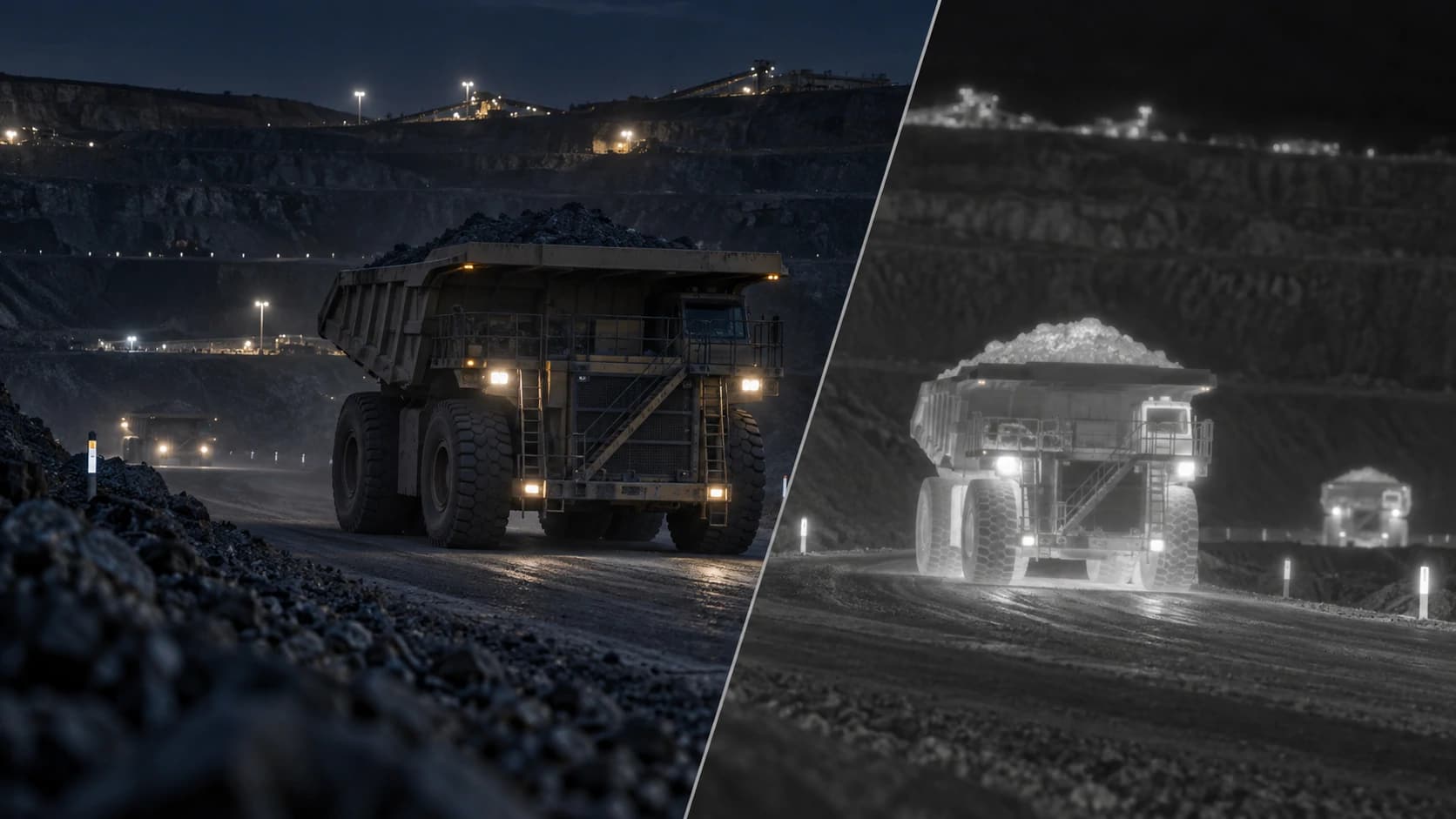
"Unlike CMOS cameras, a thermal camera operating in the lwir (long-wave infrared) spectrum does not rely on a ambient light source; instead, it captures the passive infrared radiation and thermal radiation emitted by target objects.
Thermal cameras compare variations in temperature to detect whether the object is human, animal, or vehicle, as they all have different temperatures. Since these cameras have no dependency on visible light, they can perform even in low-light and adverse weather situations, including fog, snow, rain, and dust. However, the performance will depend on the severity of the weather conditions.
The good thing is that fleet owners can employ this technology without replacing their existing cameras. This added safety can help their drivers drive confidently at night and in all challenging weather conditions.
Visibility Limits of Standard Cameras
The Blind Spots of Standard Dashcams on a Commercial Vehicle
A dashboard camera on a commercial vehicle records areas that fall within its view range. It might miss the areas alongside the vehicle.
Besides this, the camera might struggle to capture areas directly in the front bumper, especially if it is on a windshield mount. Also, a rear-facing camera mounted inside the vehicle window cannot capture the area directly behind the back of the vehicle.
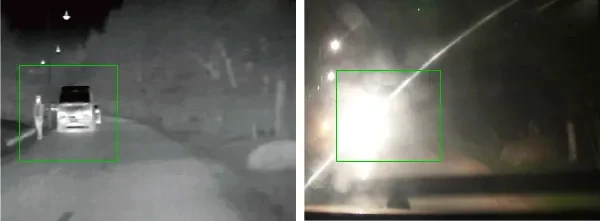
Another issue with a dashcam is that its performance degrades in low-visibility conditions.
A thermal system can better handle blind spots even at night. Since thermal camera detects heat signatures, it helps drivers spot objects in their blind spots.
Improving Commercial Vehicle Safety with Advanced Night Vision and Detection
Night driving has its own challenges. Since visibility becomes more limited after dark, drivers may find it harder to identify road hazards from a safe distance.
On roads where there is no light, drivers have to rely on headlights only.
Even a standard visible-light camera can’t record a clear view if the light is not sufficient to illuminate the road ahead. Thermal cameras, integrated with other commercial vehicle systems, can help drivers tackle this situation more effectively. For example, when combined with ADAS, a thermal imaging solution can help minimize the risk of collision to a great extent.
A thermal camera can help detect pedestrians and animals earlier by sensing infrared heat, whereas an adas system can issue warnings to the driver based on the information provided by the thermal camera and other sensors.
Built for the Highway: Heavy-Duty Hardware for Thermal Imaging Systems
Commercial vehicles have to travel through different road conditions, not just well-maintained highways. Continuous driving on bumpy and dusty roads may affect the performance of the vehicle's collision prevention architecture. Apart from this, sudden jolts and harsh weather conditions can cause ordinary cameras to fail.
Heavy-duty thermal cameras make use of industrial-grade hardware to improve their durability and stability. Their lenses, sensors, image processing units, and overall control system are designed to withstand harsh conditions.
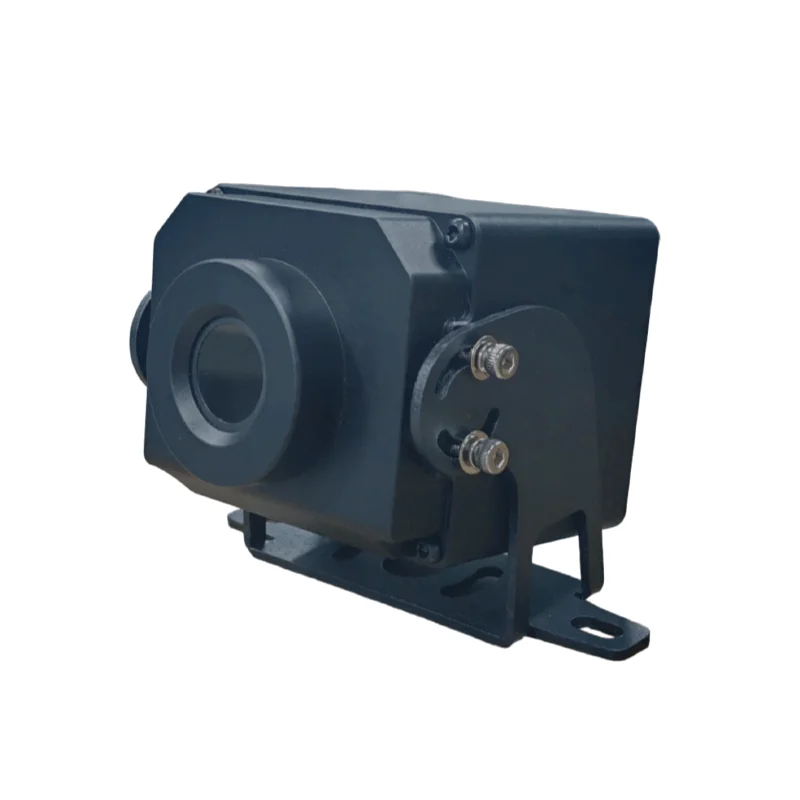
When selecting an imaging device for logistics, Tier-1 suppliers prefer ruggedized thermal camera modules. These specialized automotive thermal components are housed in IP69K-rated enclosures to withstand harsh road conditions.
The Core Reality: Thermal Tech Is a Sensor, Not the Commercial Vehicle Brain
Undoubtedly, thermal imaging sensors help detect potential hazards earlier, but they do not serve as the brain of a commercial vehicle. It cannot analyze the traffic condition and decide on its own.
The primary role of a thermal imaging sensor is to detect infrared radiation from the surrounding environment and convert it into electrical signals. Thereafter, the image processing electronics of the thermal camera process those signals into thermal images.
Besides the imaging sensor, there are other on-board components in a commercial vehicle that help in processing, recording, and interpreting data provided by a thermal camera.
A thermal camera is part of a comprehensive intelligent system that supports safety in commercial vehicles. It relies on system-level integration to communicate with integrated recording devices, displays, and Advanced Driver Assistance Systems.
In short, multiple technologies work together to improve the safety of commercial vehicle systems.
Why Sensor Systems Need a Central Processor in Commercial Vehicle Safety Platforms
Modern commercial vehicles use several sensors to support safer driving. While they serve different purposes, they are dependent on one another.
For example, a thermal imaging sensor detects heat signatures, while a visible-light camera captures visible objects on the road. Similarly, radar analyzes the distance of an object from the vehicle.
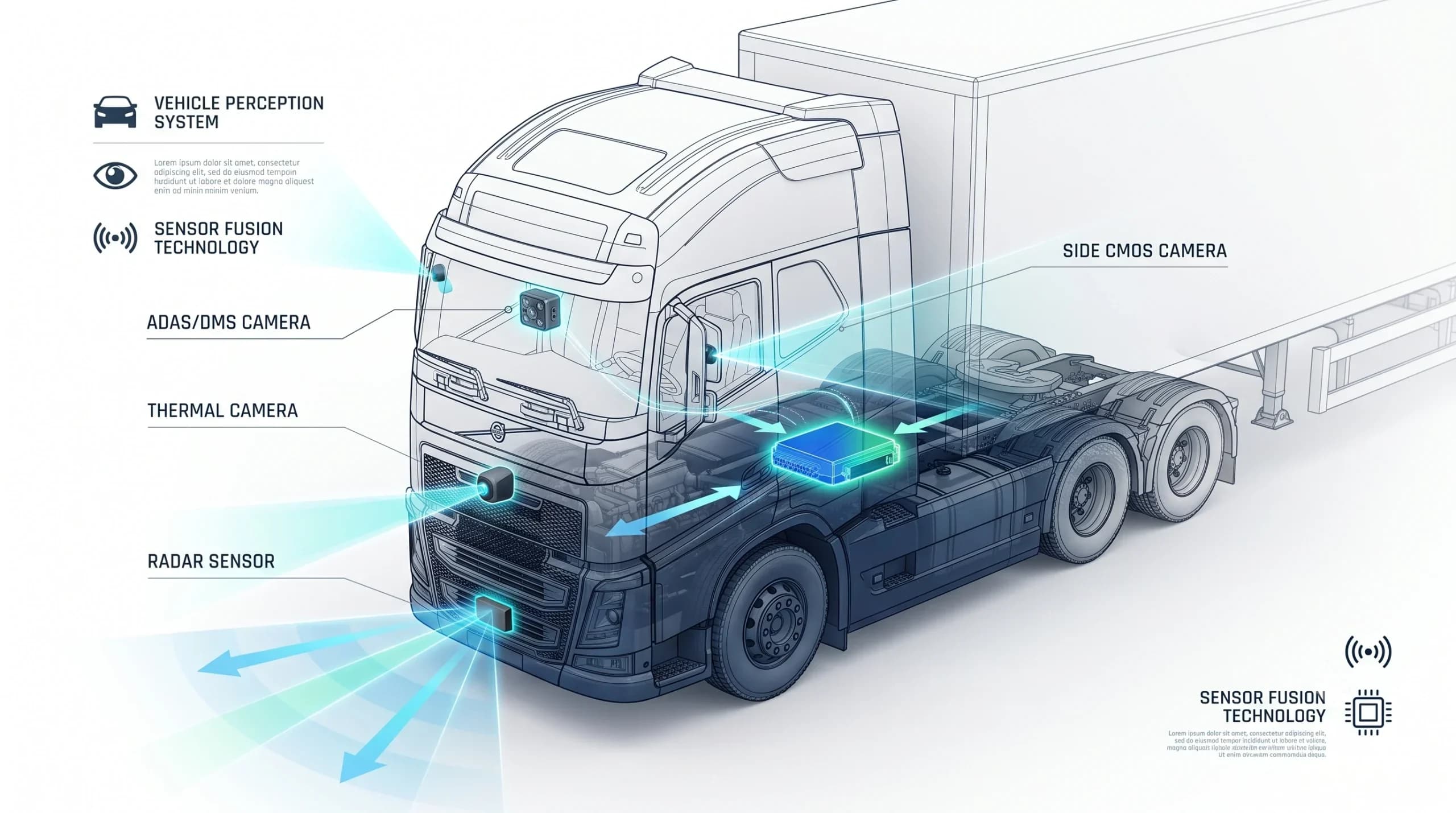
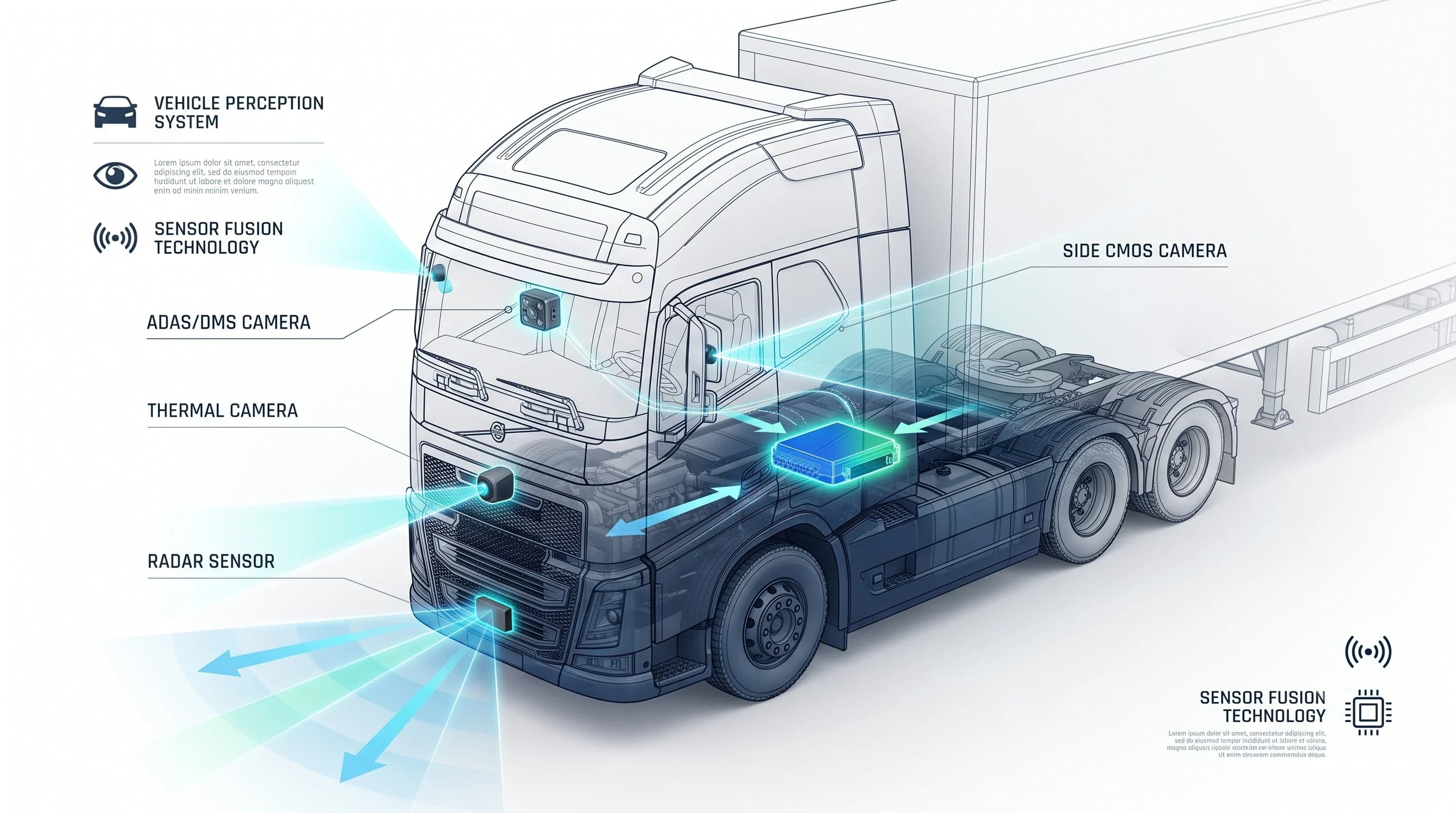
Modern commercial vehicles featuring ADAS use in-vehicle processors, such as an ADAS controller, to receive and manage inputs from all these sensors and combine them into a single yet complete picture. This process is known as sensor fusion.
When sensors work with a central commercial vehicle system, drivers do not need to rely on a single sensor for information. If one is affected by environmental or any other factor, the central processor can use the information from other sensors to improve driver awareness.
Thermal imaging sensors are an important part of a safety architecture in many contemporary commercial vehicles. Nevertheless, sensors can’t ensure safety on their own. They must be connected to a central system to function effectively.
The primary role of thermal cameras is to collect raw data. They detect infrared radiation and convert it into a thermal image. However, the sensor itself cannot find whether the object is an animal, a human, a vehicle, or any harmless object on the road.
This raw data is transmitted to the central processor or a computing platform. Thereafter, visual processing algorithm compare thermal images with inputs from other sensors to determine the type of object and the level of risk.
Making the Connection: Plugging Sensors into a Commercial Vehicle Processor
A thermal camera can generate thermal images. However, it supports advanced monitoring and safety functions only when it is connected to a commercial vehicle processor.
The thermal imaging system is connected to a central processor, Mobile Digital Video Recorder (MDVR), or an integrated vehicle computer with the help of an automotive communication interface. The connection enables thermal data to be shared with recording systems, driver displays, and driver assistance apps.
This integration forms a reliable connection between sensors and the processor. It ensures continuous data transmission during long vehicle operations in harsh environments.
Many modern commercial vehicles employ MDVR as a central recording system. It receives visual data from multiple cameras, combines them with GPS and other information, and stores them for future review.
A thermal camera transmits live thermal footage directly to the MDVR. It allows fleet operators to simultaneously compare images from integrated visible-light and thermal cameras. Also, drivers can see live feeds from both cameras to understand road conditions.
Some advanced MDVR systems are also capable of transmitting thermal videos remotely over fleet communication networks.
Thermal Imaging as Part of a Sensor Network
The central processor in a vehicle is responsible for combining data from multiple sources.
If the system assumes a collision risk and other potential hazards after analyzing the data, it can issue a dashboard alert for drivers. The intensity of the alert may depend on the degree of risk.
This system-level integration helps drivers get a better picture of the situation. Based on the information available to them, they can make an appropriate decision, especially in poor visibility conditions.
Teamwork in Tech: Advanced Pedestrian and Animal Detection
Thermal imaging sensors do not replace other commercial vehicle technologies; rather, they complement them. They can detect heat signatures in harsh weather and poor visibility conditions. However, for information like object distance, vehicle position, and the behavior of the driver, fleet operators have to rely on other smart commercial vehicle tools.
Each technology helps in different ways and provides data that is valuable for ensuring the safety of drivers, vehicles, and the cargo they carry. All in all, when fleet operators pair heat-sensing technology with other commercial vehicle systems, it helps them strengthen their commercial vehicle safety.
Upgrading Commercial Vehicle Crash Warnings (ADAS) with Heat Vision
ADAS technology enables drivers to monitor the area around their vehicles. It also sends them an alert in case of any potential danger. The warning could be for collision risks, lane changing, or real-time pedestrian detection.
The ADAS platform works efficiently using various technologies. Depending on the system type, it may use radar, LiDAR, visible-light cameras, and ultrasonic sensors to assist drivers. When you integrate thermal imaging technology into ADAS, it can improve its capability several times.
Thermal sensors provide ADAS with an additional source of information that improves driver perception to a great extent. Its thermal sensing ability assists in identifying objects in low-light conditions.
A thermal camera can assist in situations where a regular camera is not reliable, such as during poor weather or in low-light conditions. ADAS can then use information from thermal cameras and other sensors to generate more accurate information and warnings.
Vehicle headlights illuminate the road ahead for a certain distance. However, they may fail to help drivers see clearly if the weather conditions are harsh. Moreover, they cannot help much on hilly roads with a lot of bends.
On the contrary, thermal imaging sensors may help detect potential hazards in even zero-light conditions. By detecting the infrared radiation emitted by humans, vehicles, and wildlife on the road, thermal cameras can help drivers identify potential hazards a few meters in advance.
When a thermal camera is used as part of a larger vehicle safety system, it can help drivers see objects better in thick fog and dust. After all, it detects infrared radiation.
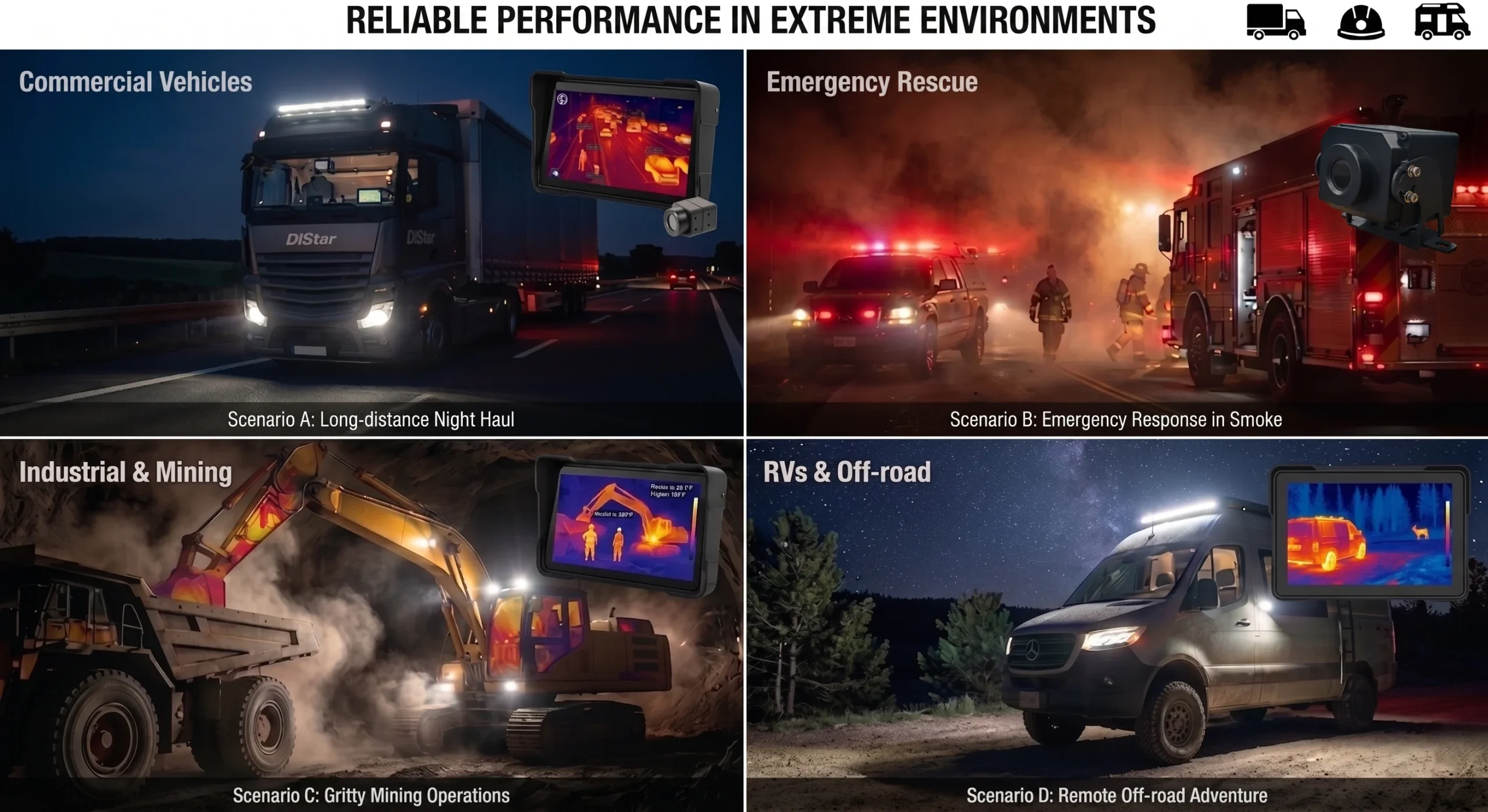
Commercial trucks often travel through harsh conditions. Fog, smoke, dust, or glare are almost everyday challenges of their journeys. Normal camera systems can struggle to capture clear visuals in these situations.
Thermal cameras can help, but must be combined with other technologies for promising results.
Using a thermal imaging system along with a regular visibility camera and other sensors can prove a smart move for fleet owners.
Tracking Operator Awareness with Commercial Vehicle Driver Monitoring Systems (DMS)
To ensure maximum safety, fleet operators should be able to detect the external environment and internal conditions of the vehicle. Besides detecting on-road hazards, it is important to observe a driver's behavior.
When a driver operates a vehicle for hours, it is natural for them to feel fatigued and sleepy. It can distract their mind and increase the risks of accidents.
Fleet operators can improve this situation by integrating Driver Monitoring Systems in their vehicles. A DMS uses cameras and AI software to detect a driver’s behavior.
Cameras are installed inside the driver's cabin. Depending on the DMS software, cameras can detect eye activity, head pose, blinking rate, and facial pose. If the system notices signs of fatigue or distraction, it can trigger an alert to the driver or transfer the information to fleet management systems.
Most DMS systems rely on visible light cameras for monitoring. If cabin lighting is low light, the DMS cameras might not detect the driver's behavior properly.
In such situations, fleet operators can rely on a thermal camera. While thermal imaging systems do not detect the driver’s fatigue and other behaviors directly, they provide another source of raw data. The central processor combines all the inputs to support driver monitoring.
Evaluating the Role of Thermal Imaging Technology
When you invest in safety technology, it not only minimizes your operational risks but also improves your business performance in the long term. If you can prevent collisions by implementing these integrated safety systems, it will save many dollars per year. After all, vehicle repairs, insurance claims, and downtime can cause a huge financial burden to fleet owners.
Saving Money by Preventing Costly Commercial Vehicle Accidents
No vehicle safety solution can guarantee accident-free operation. Thermal imaging sensors, when combined with other safety systems, can support earlier risk awareness by helping drivers identify potential hazards under suitable environmental and installation conditions.
Remember, vehicle collisions do not involve only repair expenses. Injuries or the death of a driver can result in huge financial and operational losses for your business. It can also damage your brand reputation.
Minimizing Maintenance Downtime
Thermal imaging cameras used in the transportation industry come with heavy-duty industrial-grade hardware. Therefore, they can perform better in harsh environments than regular cameras.
When you have a reliable commercial vehicle system in your vehicle, it naturally reduces the chances of unscheduled maintenance and repairs.
The Broader Perspective: Building a Unified Commercial Vehicle Ecosystem
Today, fleet technologies are more interconnected than ever. Instead of choosing a single safety system, fleet operators and logistics companies prefer to go with a unified commercial vehicle ecosystem.
This integrated approach allows different safety systems to work together and provide better outcomes in different scenarios.
Integrated Commercial Vehicle Systems
Why Smart Fleets Choose Integrated Commercial Vehicle Systems Over Separate Gadgets
The challenges of commercial vehicles are different from those of personal vehicles. After all, they operate in tough road and weather conditions. Drivers may have to drive them through fog, dense forest, rocky mountain roads, and construction sites.
In such conditions, drivers may encounter road hazards at any time. Therefore, fleet managers can’t rely on a single gadget to meet the safety requirements of their vehicles.
Opting for integrated commercial vehicle systems can be a smart move for fleet managers. Since this type of system centralizes data from multiple sensors and onboard safety systems, they better improve situation awareness for drivers.
Ready to Upgrade Fleet Safety? Get Your Commercial Vehicle Integration Plan
Integrating thermal imaging sensors into a commercial vehicle system can support driver awareness and low-visibility review when the sensor, display and platform are configured correctly. To evaluate an integration plan, share your vehicle type, safety goals and current system requirements with the Distar Mobility team.