Introduction
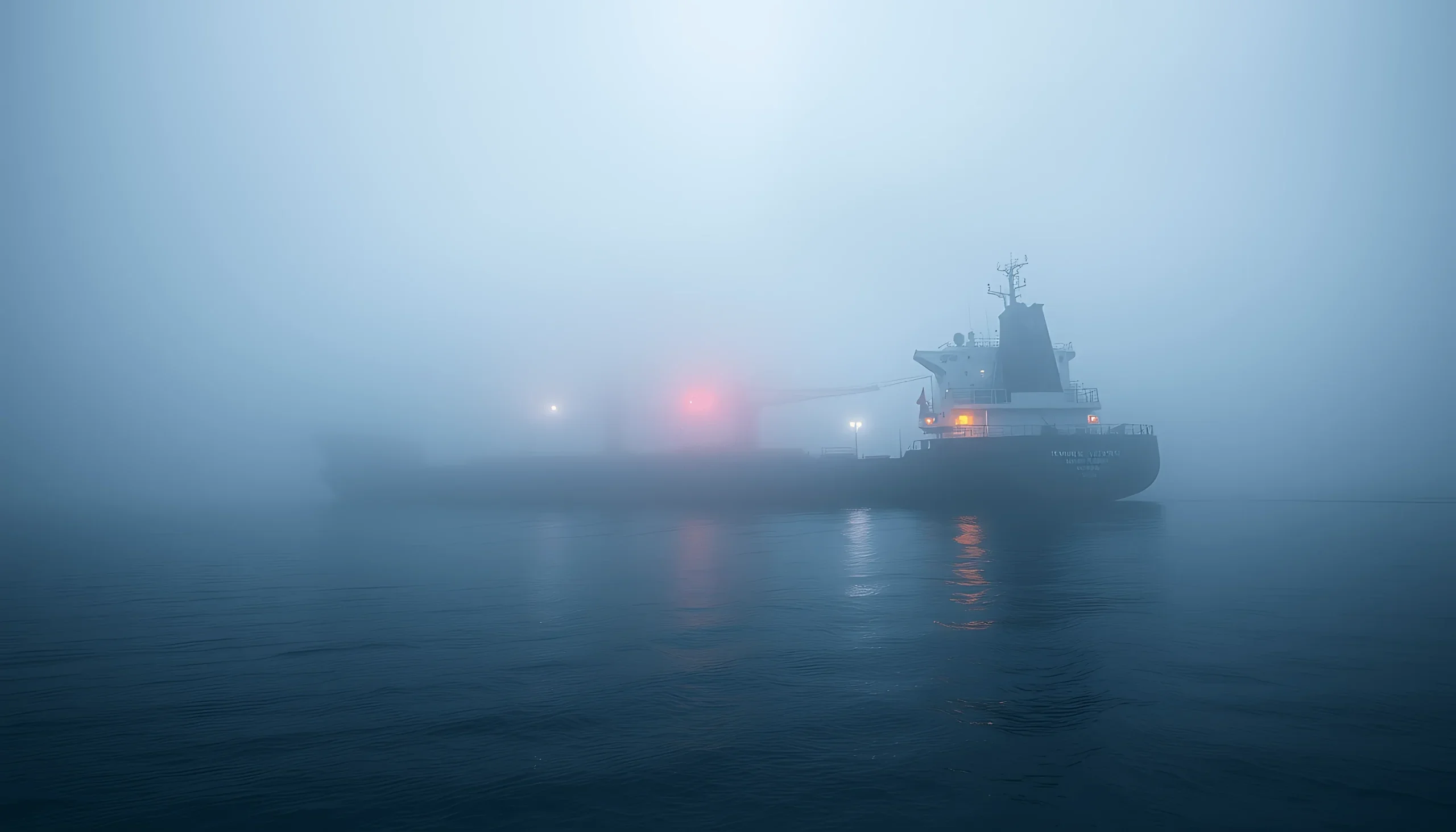
It is a foggy midnight, and all you see is darkness, but your experience tells you that there are things you can’t ignore floating on the sea. At eight knots, not seeing anything is dangerous, but it doesn’t have to be this way. You can fix this with marine thermal imaging technology.
How Thermal Cameras Support Marine Awareness
A New Way to See: How Thermal Cameras Keep You Safe on the Water
If you are thinking about night boating safety tools, an infrared camera for boats should be at the top of your list. Nothing else gives you what you’ll get from it, and you will learn everything you need to know about it in this guide.
What You Will Learn in This Simple Guide
This simple guide will walk you through:
- How thermal imaging technology works and what thermal cameras offer
- How thermal cameras help and the four tips for using thermal cameras
- The difference between radar, night vision or thermal cameras
- Features to consider and a buyer’s guide to help you choose the right camera for your boat and your budget
What Is Marine Thermal Imaging and How Do Marine Thermal Cameras Work?
Thermal imaging cameras detect heat or longwave infrared energy, which objects radiate or reflect. So, how does this thermal technology work?
The Basics of Heat Imaging on the Water
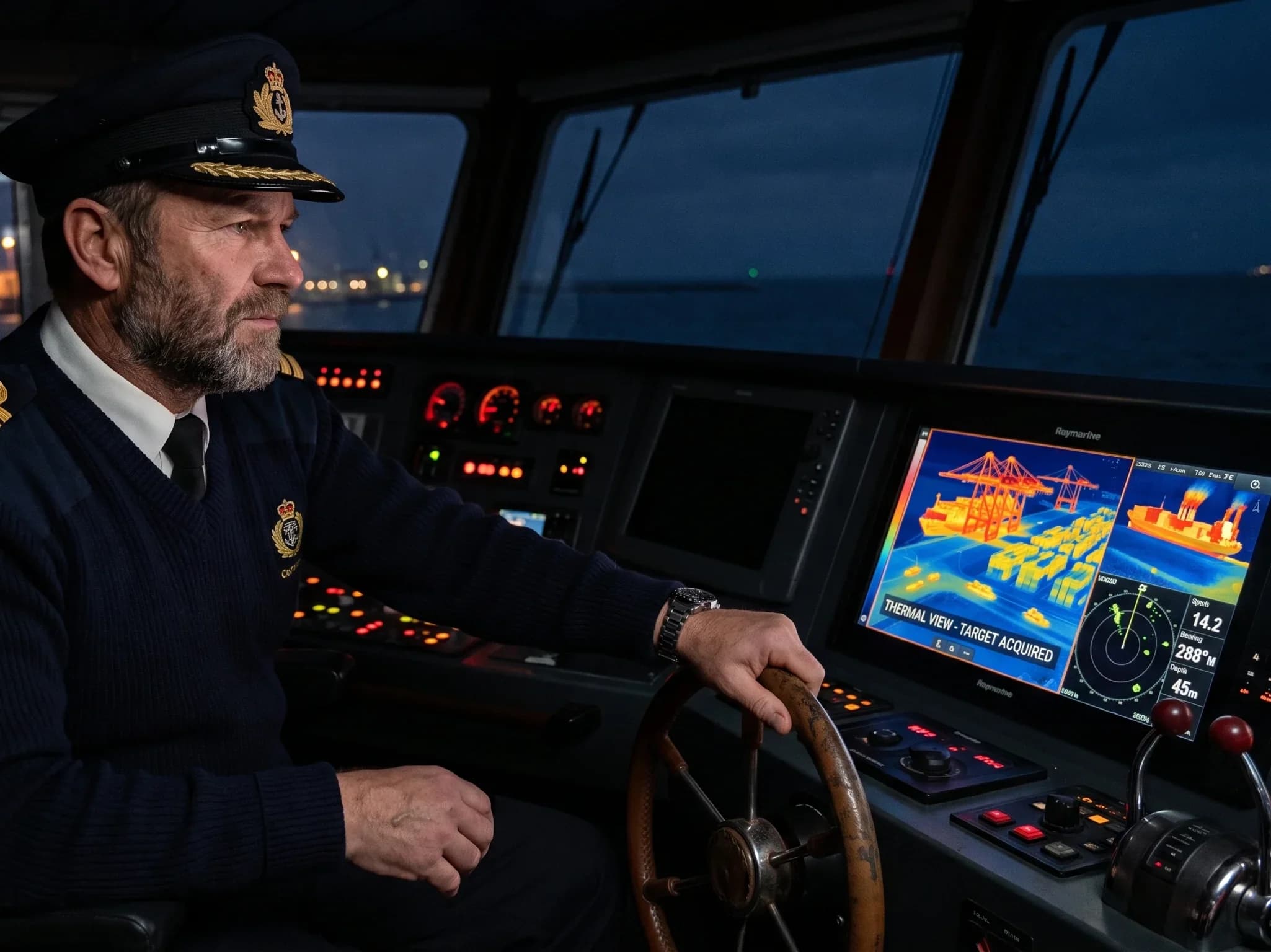
An infrared camera for boats detects heat emitted by objects on water. The camera gathers that heat in the shape of the object emitting it and turns it into a picture for you.
Your naked eyes can’t see it, but every object radiates heat. Standard glasses block heat waves, but thermal cameras let those waves pass through to the thermal camera chip due to their special germanium lens. So, that is how the camera sees warmth, but what does that mean for you?
How the Screen Turns Heat Signals Into a Clear Picture.
The chip in the thermal camera is called the microbolometer, and it contains millions of tiny thermometers. So, when you point the thermal imager at an area of water, the tiny thermometers measure the temperature of what you are looking at. Then that measured temperature appears on your screen as a visible image with the coldest areas black and the warmest areas bright.
So, basically, thermal cameras convert invisible heat waves into pictures that help you navigate.
Thermal vs. Night Vision: Strengths and Limits in Low-Light Conditions
Thermal camera vs night vision for boats can complement one another, but they operate differently.
Traditional Night Vision: Why It Fails When It Is Totally Dark
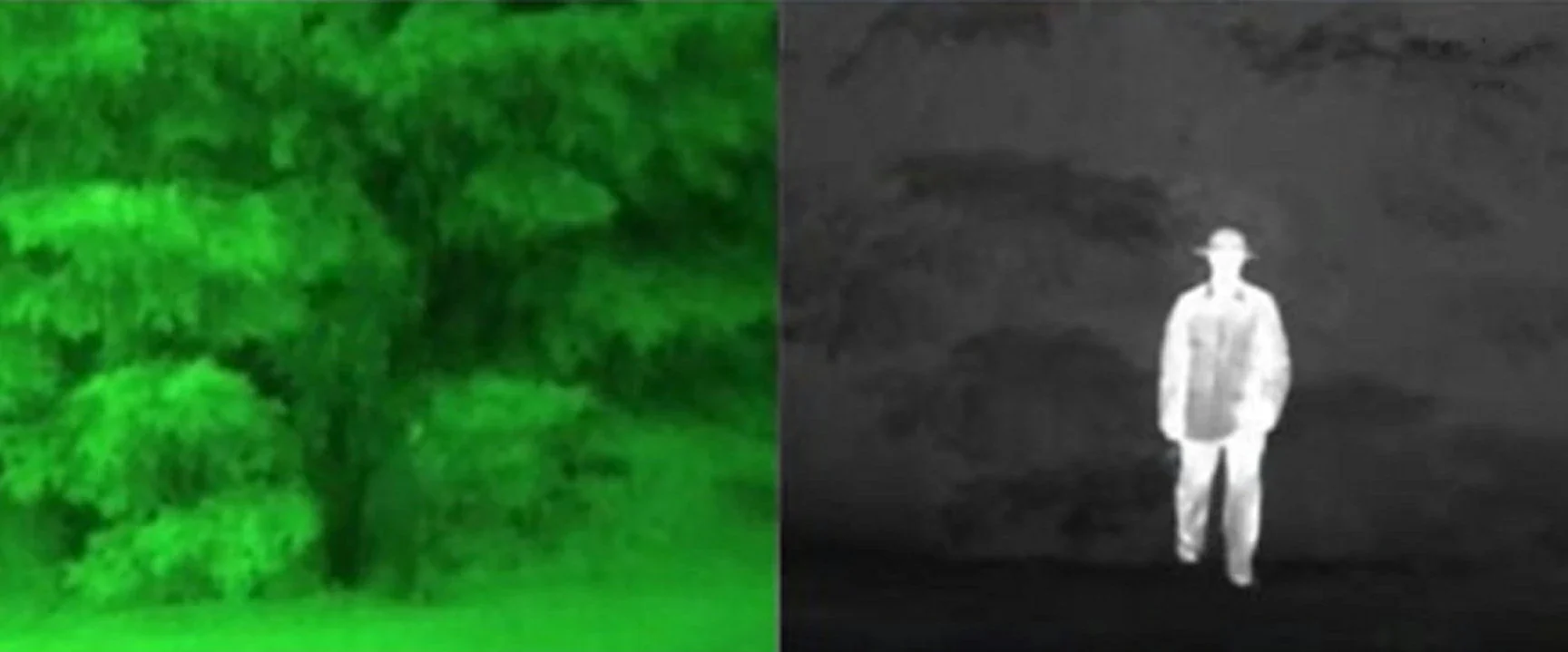
Traditional marine night vision for boats uses image intensifier tubes to help you see in the dark. These tubes capture and amplify faint light like shore glow, moonlight, or starlight and display it as a green picture for you to see.
Traditional night vision devices for boats are useful, but there are a couple of problems with them.
So, with these issues with the night vision camera, why not prioritize a marine thermal imaging camera?
- You need an ambient light source that the camera can amplify, and without this available light, it’s total blackout. This exposes you to the same danger of boating at night that you were trying to avoid.
- It can’t see through fog, heavy sea spray, thick smoke, or anything made up of physical droplets or particles. These physical droplets or particles don’t allow light to pass through them. Without that light, your marine night vision is practically useless.
- Bright light sources like blinding flares, bright spotlights, sudden or steady shorelight, and even lightning flashes can disrupt your night-vision camera.
Thermal Imaging Strengths and Limits
Thermal Imaging: Useful in Low Light, Fog and Smoke with Practical Limits
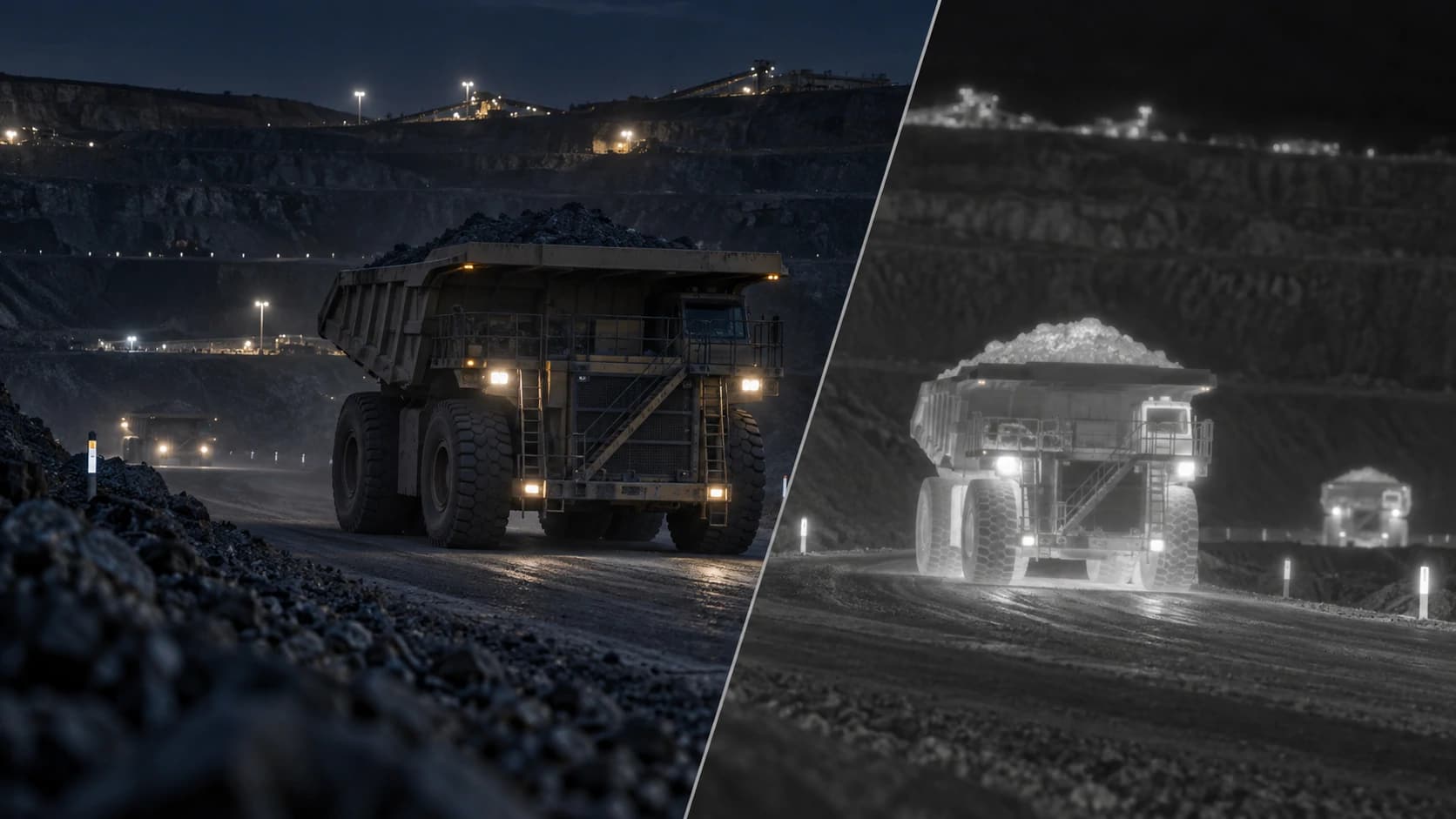
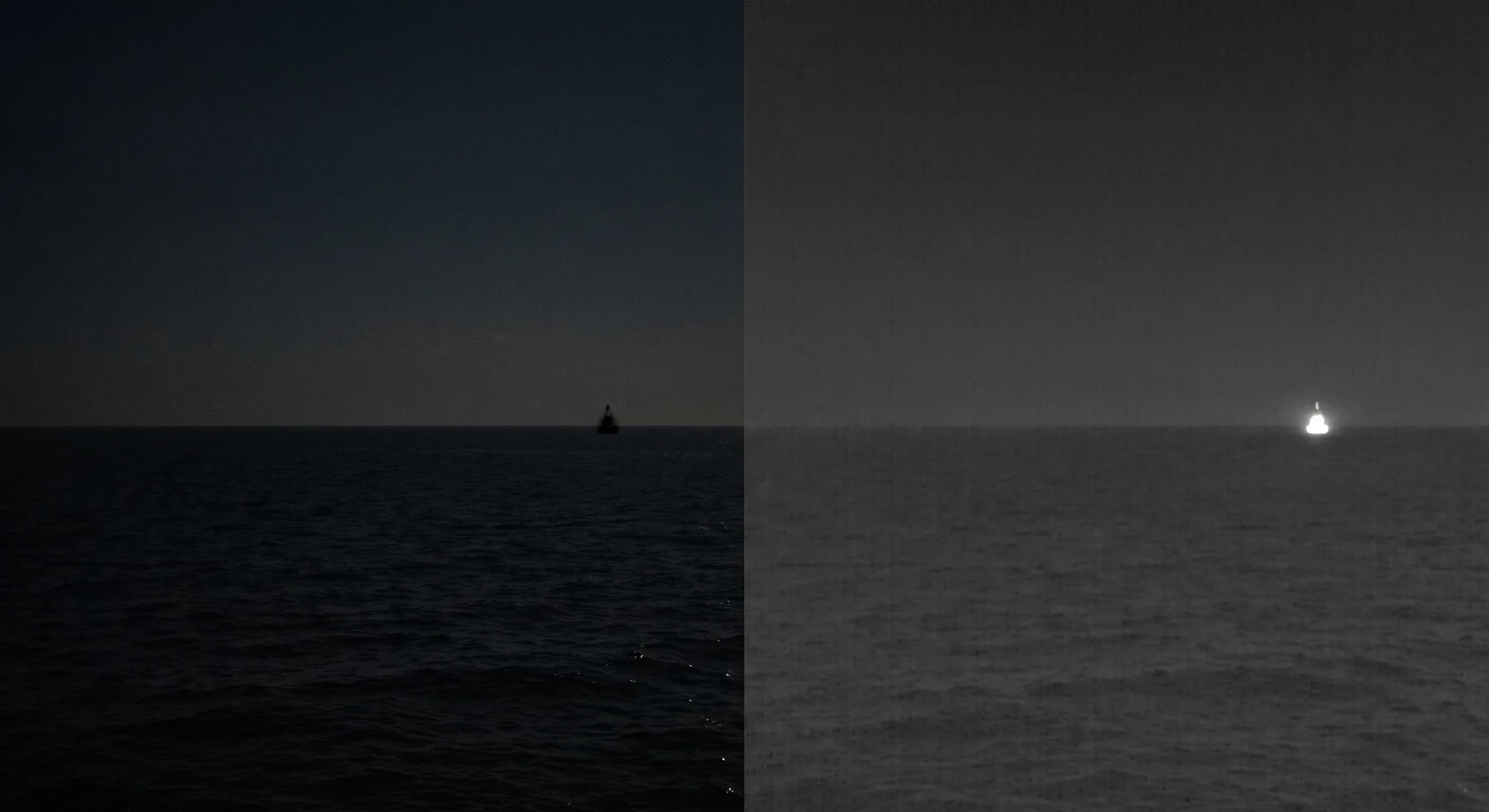
Unlike night vision, an infrared camera for boats don’t need light.
So, no matter the night boating safety equipment you get, a thermal imaging camera is an absolute priority. You can run it with your other equipment, and this brings us to marine radar.
- It works in thick fog, smoke, light rain, airborne dust, and even in complete darkness because it uses infrared radiation by detecting heat waves from objects and not light. However, heavy fog and rain limit the camera’s range, but it is significantly better than your naked eyes.
- Exposure to bright light sources won’t affect your thermal vision because it blocks out visible light completely.
Teamwork: Using Thermal Cameras and Marine Radar Together
Marine radar helps you map out hard targets like a ship and a buoy by sending out radio waves and reading the returning echoes. It works for long-distance objects and is effective during bad weather. However, radar can’t tell you what an object really is, and it usually misses smaller targets like logs and people.
Thermal cameras work as your close-range vision. It helps you identify what the radar sees and what the radar misses. So, when you run the two tools together, you get early long-range warning from your radar and identification from your yacht thermal imaging. Also, if your radar misses anything, your boat thermal camera sees it.
Key Applications of Thermal Imaging: Why You Need Thermal Imaging Cameras for Marine Safety
There are four ways to use your boat thermal camera. One will save your life, the others will save you money, sleep, or both.
Avoiding Crashing Into Objects at Night
Collisions at night can happen because people see something too late, but thermal imaging can help you avoid this.
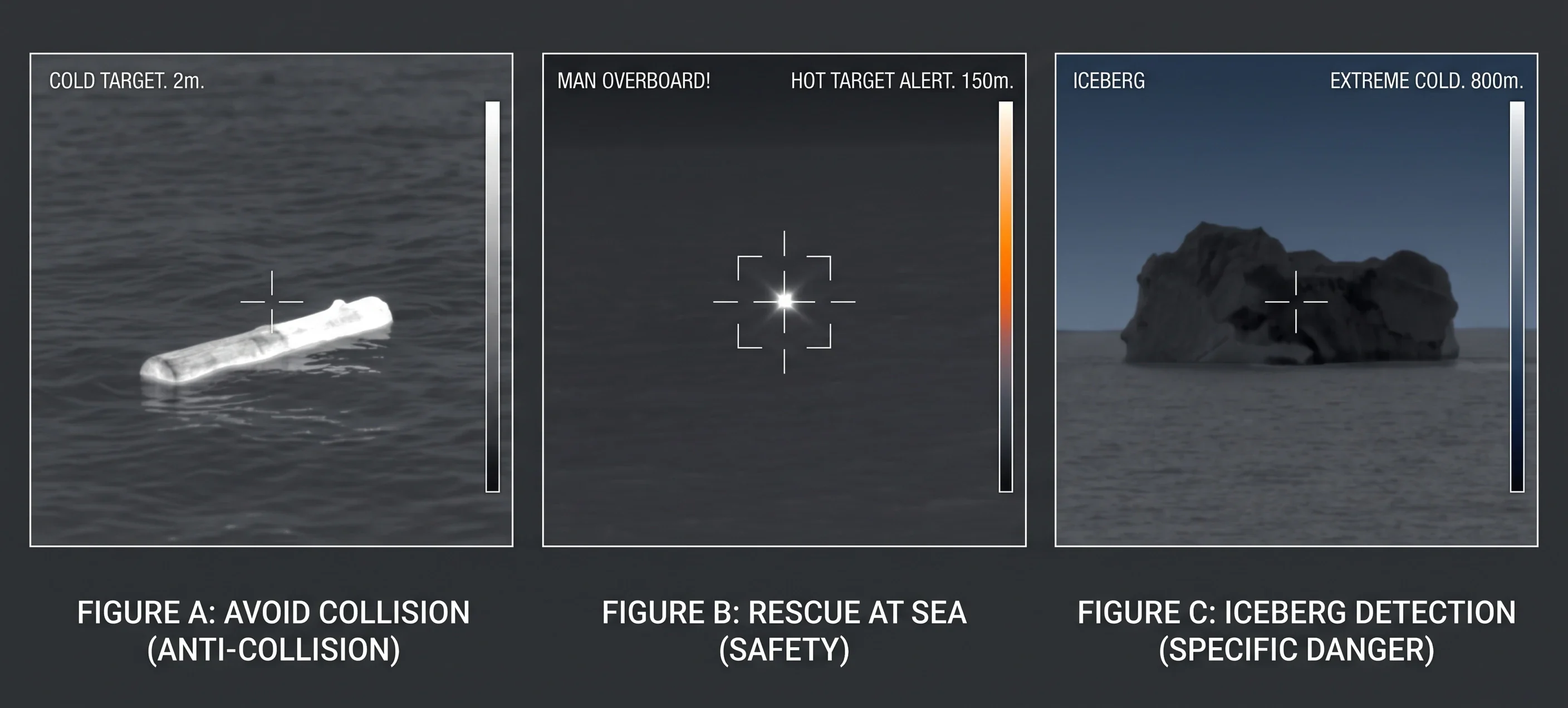
Open water at night hides major collision dangers. It could be a fiberglass hull, a kayaker with a dead headlamp, a waterlogged wooden log, or, in some cases, an unlit tender. You won’t see these objects with your eyes until it is too late, but a boat thermal camera will.
Unlike night vision, a thermal camera will detect the heat the wood and fiberglass had absorbed during the day, the heat radiating from an unlit tender, and the heat from a human on a kayak.
Marine radars and night-vision cameras miss floating trash in the water. Radars usually shoot their waves over them, and in pure blackness, your night vision doesn’t have the faint light needed to see them. Traditional night vision vs thermal imaging also has another fundamental difference. Thermal technology works day or night.
At night, thermal devices work by seeing the heat an object traps during the day. Also, it detects ice debris, but you have to pay extra attention here. Ice debris, icebergs, and glaciers are colder than the surrounding water, which appears as neutral grey or black on a thermal camera. Against that water, ice debris, glaciers, and icebergs appear as faint dark shapes. While it is faint, it is better than your ordinary eyes, marine night vision, and radar.
Marine night vision and radar are ineffective against ice debris, icebergs, and glaciers. Ice debris has millions of holes and absorbs radar signals instead of reflecting them. So, your radar will not see them or mistake them for sea waves. Icebergs and glaciers are more solid, but their sloping triangular shape reflects radar signals away from your boat. Without light, night vision devices cannot pick out icebergs.
Marine Safety Use Cases
Finding Someone Who Falls Overboard (Search and Rescue)
When it comes to rescuing someone in the water at night, a spotlight is not efficient. The person’s head is like a small black dot in the sea and you can easily miss it. Thermal imagers offer a solution that makes all the difference.
If you are wondering how to find someone in the water at night using a thermal imaging camera, the key is the heat contrast. Normally, the body has a temperature of 98.6° Fahrenheit and ocean water is colder than that. The person in the water loses heat quickly, but that heat is a bright contrast to the water’s darkness. The thermal camera has the ability to detect that contrast. However, you have to act fast.
A water night rescue is a race against time. The cold water causes hypothermia to set in within minutes. If you insist on a searchlight, you will miss your target because a searchlight casts a narrow beam of light. A thermal camera scans a wide horizon instantly and points you right to the client’s heat source.
Checking Your Engine and Boat Health
Engine problems can make your time on the water miserable. However, with your thermal imaging camera, you can easily determine your boat’s health before even going to sea. There’s more.
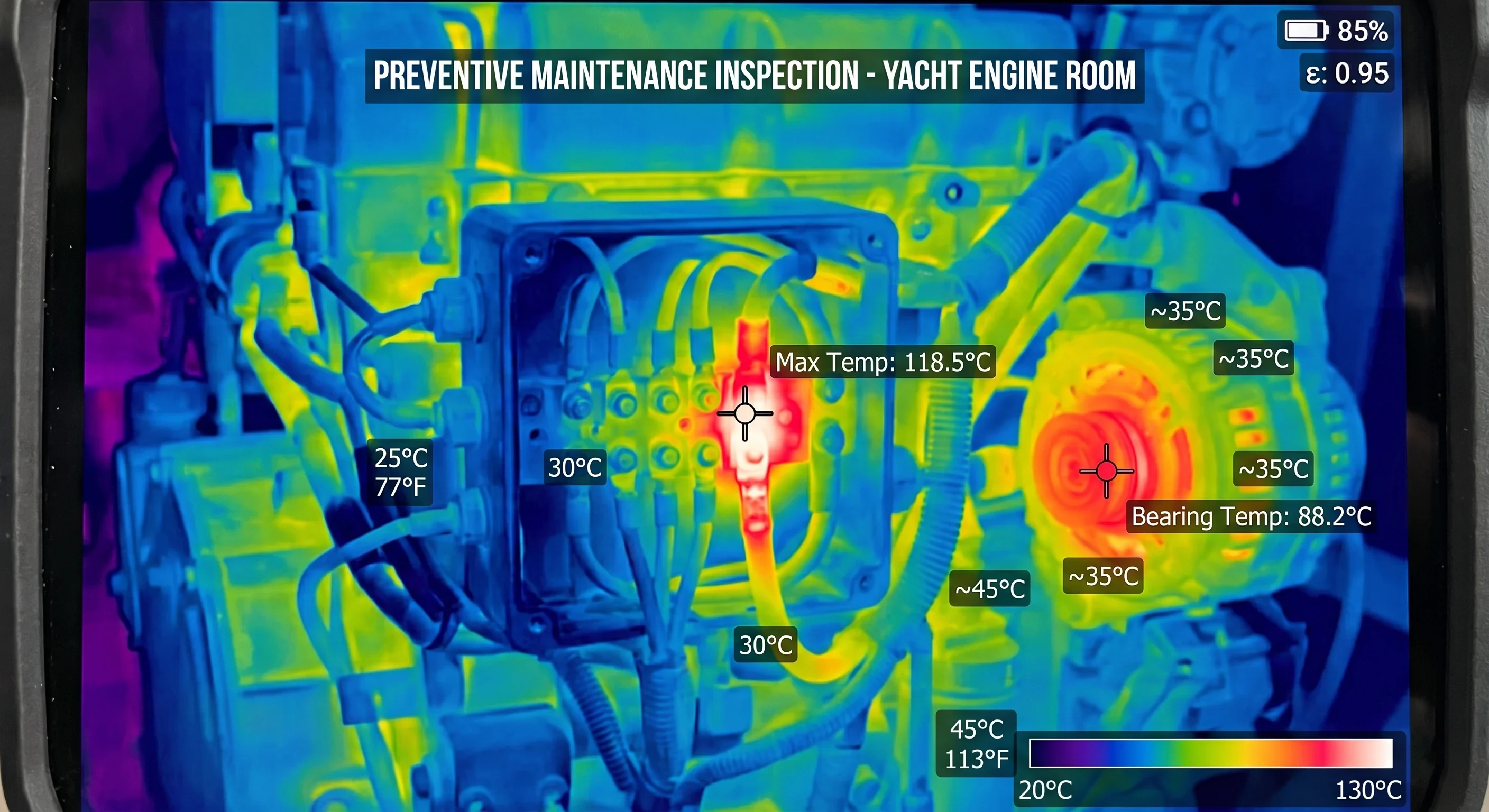
Your engine block, hoses, and exhaust pipes have different temperatures when working normally. When a component gets faulty, it emits more heat than usual. Your thermal imaging camera can help you identify this component long before your engine overheats and breaks down.
Electric faults are the leading cause of boat fires. Loose wires and rusty connections create electrical resistance, which in turn creates intense heat. So, even before a fuse blows or wire melts, you are already in trouble. When that fire breaks out, it could become really dangerous before you get the fire extinguisher.
So, scanning your boat with your boat thermal cameras provide you with a way to discover hazards instantly. Scan your panel, battery terminals, and wiring. The faults will appear as white or bright red dots on your camera.
Keeping Your Boat Safe from Thieves and Intruders
Thermal imaging can help you save a crewmate who went overboard. It can also prevent intruders or thieves from boarding.
Docklights help keep your boats safe, and with a security camera, you can easily spot intruders. However, docklights have a reputation for developing faults or can even be destroyed. Without these lights, your security camera becomes useless. Thieves and intruders can use the cover of darkness to sneak into your ship without being spotted.
Having and running a yacht thermal imaging camera for surveillance helps you see intruders before they even get to your ship. With this, you can form a plan to deal with them while staying safe in your ship.
Buyer’s Guide: How to Choose the Right Thermal System for Your Vessel
You have seen how thermal can be useful, but which kind is best for you? Handheld cameras or fixed-mount cameras?
Handheld Cameras vs. Fixed Mount Cameras
The kind you should get depends on what you want to use it for and your budget.
If you care about safety but don’t want to spend so much on thermal imaging or have a small boat, you should buy a handheld thermal camera. This camera looks like binoculars or a small video camera. It has internal batteries, so you don’t have to connect it to your boat’s electrical system.
Due to its size, you can easily pass it around the crew or protect it in a safety bag. If you already have a fixed thermal camera, you have the handheld as a backup, which brings us to fixed cameras.
Selection Factors for Marine Thermal Imaging
A fixed infrared camera for boats is costlier than a handheld one. It is mounted on the boat’s mast, hardtop, or arch and connects to your helm’s screen. From the helm’s dashboard, you can control the camera’s rotations. Also, the image from the camera remains stable despite the boat’s rocky motions because it has advanced stabilization features.
Easy Terms You Need to Know Before Buying
There are three terms you need to know before buying.
So, standard marine thermal imaging cameras have a 320-by-240 pixel resolution. The advanced camera has a resolution of 640 by 480 pixels, which allows it to show more heat details in the picture it produces. The extra details make the image you get sharper.
A refresh rate also determines your image quality. It is measured in hertz, and it is the number of times per second your camera updates its image.
A 9 hertz camera updates its image 9 times per second, which makes your image choppy if your boat or object is moving fast. A 30-hertz camera updates 30 times per second, providing high resolution imaging when you are moving fast or scanning a fast-moving object.
Distance: How Far Can the Camera See?
How far a camera can see depends on the lens size and how sensitive the sensor is. Handheld cameras are close-range and let you spot objects from 300 to 800 meters, depending on the sensor power of the device you get. Fixed cameras have a larger lens and can spot a large vessel from 3 to 4 nautical miles away or a person overboard from 0.5 to 1 nautical mile. However, some high-end units go beyond this.
Two-in-One Cameras: Combining Heat and Normal Night Vision
Combining heat and traditional night vision would be great for your navigation and there is equipment that offers both. Thermal imaging allows you identify the heat source of hidden objects and when there is a faint light source, you can easily pick out clear details like a boat name.
Final Thoughts and Future Trends
How Marine Cameras Are Becoming More Accessible for Vessel Operators
Thermal imaging isn’t exclusive to the military or yachts anymore due to its real-world uses. The cost of manufacturing sensors has dropped, and you can get a boat thermal camera that matches your budget and purpose.
Join the Conversation: Tell Us Your Best Night Boating Tips (CTA)
You have the skills. Now what you need is thermal imaging to take your night boating to the next level. Browse our thermal image units. We have different high end thermal devices and a range of models for any budget. Do you have any other tips for boating safely at night? Share it. It could be what would keep another boating crew safe.